Make your own rainbow crayons!

Making rainbow crayons.jpg

Making rainbow crayons

Have you ever seen those PinInterest posts where they talk about how easy it is to make your own crayons? They tell the truth! These are a great idea for a special & personalized gift, or as favours in homemade christmas crackers (bonbons), or just because it’s a rainy day!

Ingredients

  • Silicon mould tray
    • Be careful to choose one that can go in the oven.
  • Crayons
    • This can be a great way to use up spare crayons or crayon ends.
  • Optional: glitter & sparkles!

Directions

  1. Break your crayons into small pieces (i.e. adult thumb nail); you may need to use a knife.
  2. Pop them into the silicon mould. Have a think about what kind of colours you want (i.e. rainbow? ocean theme with various shades of blue & green?)
  3. Add sparkles & glitter shapes if you want.
  4. Bake in the oven at 200’C. Keep a close eye on them as you only need it in there until the crayon has melted into a thick liquid (i.e. you’re not trying to get it to bubble & boil).
  5. Remove from oven and allow to cool.
  6. Pop out of the moulds and have fun!
Rainbow heart crayons.jpg

Rainbow heart crayons

Hint: Wondering what to use the silicon mould tray for afterwards? It’ll probably need to get relegated to your arts & crafts box (rather than cooking in the kitchen). The good news is that it’s great for paint!

Silicon moulds as artists easel.jpg

Silicon moulds as artists easel

What are adenoids and why do they need removing? (What is an adenoidectomy?)

What are adenoids?

What do swollen adenoids look like?

What are adenoids?

Adenoids are soft tissue located located behind the sinuses; they are part of the body’s lymphatic system (so are tonsils). When they are working properly, they help to recognise bacteria and viruses entering through the nose and produce white blood cells to fight off infection.

Adenoids are particularly useful during early childhood while the body is still encountering new bacteria and viruses for the first time and building up the immune system. Doctors tend to consider them most useful up to age 7; in adolescence they begin to shrink and by adulthood they can practically disappear.

Why do adenoids needs removing?

Sometimes in childhood the adenoids swell and stay swollen. This can be due to frequent infections, due to a chronically over-active immune system (i.e. in an atopic child there might be ongoing aero-allergens and food allergies), or for reasons unknown.

This swelling is particularly problematic the younger the child is because their airways are so small to begin with! Also, swollen adenoids often aren’t the only problem. Look at the picture above and imagine that there is also swelling in the nasal passage (swollen turbinates) and that there are also swollen tonsils in the throat – that can result in a highly miserable toddler!

What are the possible side effects of swollen adenoids?

  • Obstructive sleep apnea. The swollen adenoids can intermittently block airflow. It sounds like your child is silent and then there’s a big noisy sucking in of air.
  • Snoring and heavy mouth breathing.
  • Snotty / blocked nose.
  • Repeated ear infections. The swollen adenoids can block the Eustachian tubes and prevent fluid draining from the ears to the throat.
  • Blocked ears meaning that everything sounds a bit like it’s underwater.
  • Blocked nose meaning a deadened sense of smell. This can also impact their ability to taste foods.
  • Sinus headaches / pressure (in conjunction with blocked nose).
  • Sore throat and/or difficulty swallowing.
  • Fatigue. They might seem like they’re getting enough hours of sleep but in reality the quality of sleep is poor because their body is struggling to get enough oxygen through the night. It’s a bit like starting each day on a half tank of gas.
  • Developmental delays. Sleep is critical for young children. During those early years, they are rapidly growing and learning. They need sleep to focus during the day; to have time for their brain to make connections between all the things they have learned or experienced; and their brain releases a growth hormone while they sleep. Poor sleep, fatigue and pain/discomfort, trouble hearing: these can make it harder for them to stay on track.
  • Behavioural difficulties. Poor sleep, fatigue and pain/discomfort, trouble hearing: these can result in daily misery that they don’t know how to express.

Why didn’t the doctor identify this earlier?

Your normal doctor (a GP) and even a paediatrician can’t see that the adenoids are swollen. You need to be referred to the Ears-Nose-Throat clinic at your local children’s hospital. They will be able to look in their nose and throat during the initial visit and then may request a facial x-ray and/or CT scan for confirmation. They may also monitor the adenoids over a few visits in order to confirm that they are chronically enlarged and not temporarily swollen due to infection; they may also try medications for a few months to see if these help.

It can be a bit like diagnosing the wind – you can’t see the wind but you can see the effects of the wind. You may even have the referral because of something unrelated (like repeated ear infections) and as a result of that find out that the adenoids have been swollen all along.

What does surgery (an adenoidectomy) involve?

Surgery will normally take place at a hospital (probably as an outpatient). The doctor will review medical history in advance and make recommendations about pausing medications. You will normally be advised not to take anti-inflammatory medications within 7 days of surgery. They will also discuss post-operative pain medication.

The day of the surgery will involve a period of fasting; food or water won’t be permitted because they can impact the anesthetic. It’s a good idea to have family support and a game plan of how to distract your child; an older child may understand why they can’t eat but a toddler is likely to just focus on the fact that they are off routine and they are HUNGRY!

During surgery, your child will be under a general anesthetic. The surgeon will enter through the mouth and the adenoids will be removed with an electrical cauterizing unit. You can watch videos of adenoidectomies (like this one); they aren’t pleasant to watch but it can be useful to help you understand what will happen.

What happens after surgery?

Depending on the age of your child, they may keep them in the hospital overnight for monitoring or they may go to a recovery room and then go home the same day.

They may feel quite groggy and tired for the next few days and also have some nausea; vomiting once or twice is normal but contact your doctor if vomiting persists.

A light, cool diet for the next few days is generally recommended (avoid hot liquids).

I’m sure my parents don’t have fond memories of me having my tonsils out when I was 4. I still remember staying overnight in the hospital! Mostly my memories are positive ones due to the fact that I got to spend a week lording it over my baby brother that I got to eat jelly and ice cream. No memory of the pain remains but the joy of those unexpected treats has lasted decades!

They will prescribed antibiotics and some light pain relief. They need lots of rest for 4-5 days to promote healing but the good news is that it is a much faster heal time than for having tonsils removed. They will also generally have 7-10 days off school and 3 weeks off sports, exercise, and swimming.

They will generally have post-surgery check-ups; your doctor will talk you through potential complications and when to seek immediate medical care.

They may have nasal stuffiness for a few months after surgery and may need nasal drops. Snoring may continue for several weeks after surgery (and may temporarily get louder). Their voice may temporarily change for a few weeks to a few months!

Keep in mind that removing the adenoids may only be one part of a wider treatment plan. If the chronic inflammation was linked to allergies then you will still need to work with a doctor to create an ongoing allergy treatment plan.

Looking for more information? I read through a wide number of sites  and this was the one I found most useful.

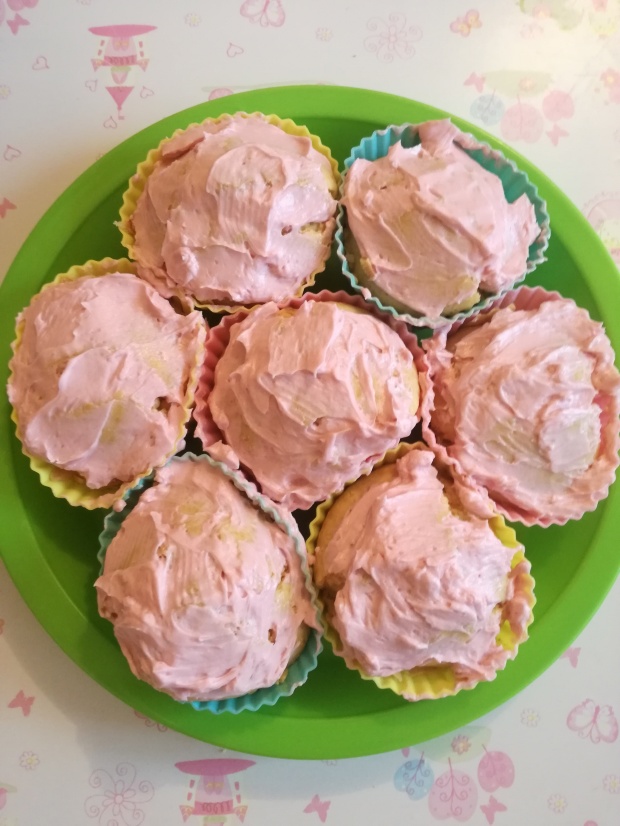
Blood Orange Icing (a.k.a. how to make pretty pink icing without using artificial colours)

Gluten Free Cupcakes with all natural pink icing

Gluten Free Cupcakes with all natural pink icing

My daughter is sensitive to red food colouring – as are many kids! For some reason New Zealand still allows artificial food colouring agents to be sold here that are banned in many parts of Europe. I’ve been doing more research (as you might have noticed from the post on why to be cautious about annatto as a colouring agent) and am experimenting with natural food colours.

One way to make pink icing is to use beetroot juice but I’m not a big fan of beetroot so instead decided to make a Blood Orange icing that has a beautifully delicate berry flavour and uses fruit tea!

The secret ingredient to this icing mix is Blood Orange fruit tea which uses a mix of

  • Hibiscus
  • Apple
  • Rosehips
  • Natural Flavouring
  • Stevia
  • Orange Peel

Not only do you get to make icing but you can also make yourself a cuppa in the process. Incidentally, this tea is also lovely cold, with sparkling water, or in fruit punch. You could also experiment with other fruit teas (like Blueberry & Blackcurrant) to make other colours.

Ingredients

  • 50g Butter or allergy free spread (i.e. Nuttelex)
  • 1c icing sugar
  • Blood Orange tea bag
  • Hot water

Allergies: gluten free, dairy free*, egg free, soy free, nut free.

Directions

  1. In a mug steep the Blood Orange tea bag in a small amount of boiling water (i.e. about 50 ml). Allow it to cool and it should have a concentrated deep red colour.
  2. Cream the butter and icing sugar.
  3. Slowly add the (cooled) blood-orange-water to the mix until you have the colour and consistency that you desire. (Add more icing sugar if needed).
  4. Ice your cupcakes (like these Gluten Free cupcakes!)

Note: You can also make this with just icing sugar and the Blood Orange mix to make a darker colour.


Gluten Free Cupcakes

Gluten Free Cupcakes with all natural pink icing

Gluten Free Cupcakes with all natural pink icing

I love experimenting with gluten free baking! As well as this vanilla cupcake recipe, I also have different recipes for chocolate cupcakes and berry muffins.

Ingredients

Cupcakes

  • 1c superfine white rice flour
  • 1T glutinous rice flour (also marketed as ‘sweet rice flour’)
  • 1/2 fine cornmeal (polenta) – use finely milled.
  • 1/2c sugar
  • 1 tsp guar gum
  • 2 tsp Baking Powder
  • 1/2 tsp Baking Soda
  • Pinch salt
  • 1/3c neutral oil (i.e. Rice Bran Oil)
  • 1 egg (or egg replacer)
  • Vanilla
  • 2/3c water

Allergies: gluten free, dairy free, egg free*, soy free, nut free.

Makes 8-10 cupcakes.

Directions

  1. Mix all the dry ingredients together.
  2. Whisk the egg (or egg replacer) until fluffy and pour in.
  3. Add the oil and vanilla. Mix.
  4. Slowly pour the water in while mixing.
  5. Spoon into cupcake cases and bake at 180’C for approx. 25 mins until golden.
  6. Allow to cool and ice. I used a Blood Orange icing with no artificial colours!


Tip: My current preferred method for cooking cupcakes is to fill a large cake tin with silicon cupcake cases (so that they are touching). This helps them to keep their shape and is super easy to get in and out of the oven.


Icing 

The icings that I use don’t have any artificial colours, glycerin, additives etc.

Chocolate Banana ‘Yoghurt’ (Dairy free)

Chocolate Banana 'Yoghurt'.jpg

Chocolate Banana ‘Yoghurt’

I was looking for dairy free alternatives to yoghurt and similar products. This is a similar recipe to the Chocolate Avocado Mousse but is the consistency of pouring yoghurt instead of mousse.

Note: This recipe is best made with a food processor (or possibly an electric beater)

Ingredients

  • 1 large banana
  • 50g cocoa powder
  • 3/4c coconut milk
  • 1 tsp vanilla extract
  • pinch salt
  • 3-4T brown sugar.

Allergies: gluten free, soy free, dairy free, egg free, nut free.

Directions

  1. Blend until smooth.
  2. Serve immediately or chill.

Sri Lankan Breakfast Roti


Makes 10 helpings. These are warm and savoury; leaving out the onion & chilli they can be paired with jam or a chocolate spread instead.

Ingredients

  • 3c flour
  • 1c cool water
  • 1c dessicated coconut (soaked in water)
  • 1T neutral oil (I like rice bran oil)
  • 1/4c finely chopped onions
  • 1/4c finely chopped chillies (optional)

Directions

  1. In a large bowl, combine the flour, salt, oil, and soaked coconut. Add the cup of water slowly until a soft dough forms. If using chilli and onion, add these now. Be careful not to overwork the mixture.
  2. Form the dough into 10 balls of equal size. Gently roll the dough into shape. In an oiled pan, fry in high heat until both sides are brown. Be careful not to overcook (like I did!), it should be soft rather than hard.

Allergens: soy free, dairy free, egg free, peanut free, tree nut free.

Source: M. Tharaneetharan, World Concern, Sri Lanka.

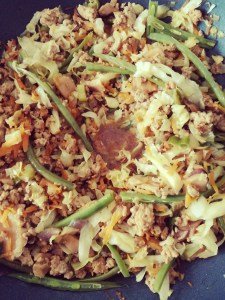
Mu Shu Pork – Chow Mein – Chop Suey all from one basic recipe!

Mu Shu Pork.jpg

Mu Shu Pork

I came across this recipe by Cybele Pascal  in a chapter of her allergy friendly cookbook about making takeaways at home. I haven’t heard of Mu Shu Pork before but apparently it’s a popular takeaway in the United States and based on a stir-fry dish made in northern China and eaten rolled in small pancakes rather than over rice. This recipe has a few adjustments (such as not including soy sauce or egg) in order to make it free of the top 8 allergies. The recipe is also very similar to how we make Chow Mein in New Zealand, it’s all about what you serve it with!

Mu Shu Pork: Serve with Chinese pancakes (delicious scallion pancakes can be picked up from the freezer section of most Asian supermarkets) OR use rice paper wraps OR use gluten free wraps or corn tortillas. *Food allergies mean getting a little inventive! I’ve used both rice paper (like making summer rolls) and gluten free wraps; both are delicious.

Chop Suey: Serve over rice. Consider garnishing with crunchy crispy Chinese noodles (from the snack section of the supermarket).

Chow Mein: Serve with noodles. You can cook with glass noodles (mungbean or rice vermicelli) or with thick egg noodles. Consider garnishing with crunchy crispy Chinese noodles (from the snack section of the supermarket).

Ingredients:

Stir Fry Sauce

  • 1/2 chicken or vegetable broth
  • 2T coconut amino acids (or soy sauce)
  • 2T neutral oil (i.e, rice bran oil)
  • 1T rice vinegar
  • 1T cornstarch, or tapioca starch, or superfine white rice flour
  • 1 tsp honey

Stir Fry

  • 1T neutral oil (i.e, rice bran oil)
  • 400-500g pork mince (ground pork)
  • 1c red onion, finely diced
  • 2T minced or grated ginger (or 2tsp ground ginger)
  • 2 large cloves garlic, finely chopped
  • 1c thinly chopped shiitake mushrooms
    • Can also use wood-ear mushroom or substitute in a local mushroom. Note: you can often buy dried shiitake mushrooms more cheaply than fresh; they’ll need 30 mins or so to soak in water before using.
  • 1/2 tsp salt
  • 3c shredded cabbage
  • 100g snow peas, sliced into thin vertical slivers
    • I subbed green runner beans.
  • 1c grated carrot
  • 1-2 green onions (spring onion), white and green parts, chopped.

Plum sauce (optional dipping sauce)

  • 1c plum jam
  • 1/2tsp garlic, finely minced
  • 2 tsp ginger, minced or grated
  • 2T cider vinegar
  • 1/4 tsp salt
  • 1T Sriracha or other chile-garlic sauce

Allergies: gluten free, soy free, dairy free, egg free, nut free.

Directions – Mu Shu Pork

  1. Mix up the stir fry sauce.
    • Tip: Put into a jar or small sealed container; put on the lid and shake until the honey and tapioca starch have dissolved.
  2. Heat the oil over high heat in a non-stick wok or frying pan.
  3. Add the pork, onion, and ginger. Cook, stirring, for 3 minutes until the pork is no longer pink and the onion is tender. Break up the pork with a spoon so that the mince is nicely crumbled.Add the garlic, mushrooms, and salt; cook for 5 minutes until the mushrooms start to brown.
  4. Add the cabbage, snow peas, carrot, and spring onions. Cook and stir for 2 minutes.
  5. Add the stir-fry sauce and stir. Cook for 3 minutes.
  6. Serve with chinese pancakes / rice paper wrappers / tortillas.


Directions – Plum Sauce

  1. Combine all ingredients in a pot and bring to a simmer over a high heat. Reduce to medium-low and cook for 5 minutes, stirring often.
  2. Let cool to room temperature and then puree in a blender.
  3. Makes about 1 cup that can be stored covered in the fridge for several weeks.

Yummy things to make with feijoas!


It’s feijoa season which means it’s time to indulge in fresh fruit, smoothies, and baking! Why not try some new recipes:


Tip: Instead of cutting the feijoas in half and scooping out the middle, try this method to maximize the amount of flesh that you’re getting. It ends up being much quicker when you’re trying to get lots of feijoa!

  1. Top & tail the feijoa.
  2. Stand it on it’s end and with a sharp knife cut away vertical strips of peel. It doesn’t have to be completely perfect as the peel is edible.
  3. Cut in half (or into sections) to serve to toddlers or for blending.


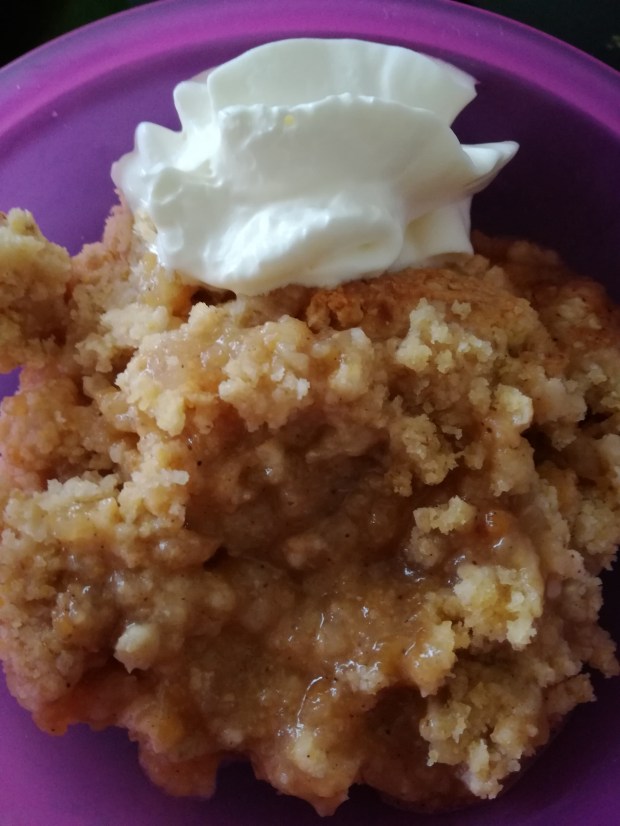
Fruit Crumble (allergy free!)

Gluten free fruit crumble

Gluten free fruit crumble

Looking for something easy to make for the family over Easter? Why not try old fashioned fruit crumble? Warm, delicious, comforting, and the leftovers also make a great breakfast. This recipe is a bit of a twist on an old classic as it is free of gluten and other key allergens.

Ingredients

  • 3-4c stewed fruit
  • Brown sugar
  • Cinnamon
  • Ginger
  • Allspice

Topping

  • 1c rolled oats
  • 1c superfine rice flour / plain all purpose flour
    • 1/4 tsp guar gum or xanthan gum if using gluten free rice flour.
  • 1/2c cornmeal (polenta)
  • 150g Nuttelex (allergy free vegan spread) / margarine / butter
  • 2 tsp Baking Powder
  • 3-4T honey, or brown sugar, or maple syrup.

Optional:

  • 1/2c finely grated carrots
  • 1/4c almond slivers
  • 1T ground linseed
  • 1T chia seeds

All extra ingredients that I would like to try in the topping! (Though I don’t think I’d add all at once).

Allergies: dairy free, soy free, gluten free, egg free, nut free.

Stewed Fruit

Some fruit does need to be stewed before being used in the crumble; these are mainly harder fruits like apples. You can chop apples up finely, add a little water, and cook them quite quickly using a microwave steamer.

If you have a food processor then it’s easy to blend fruit before putting it in the crumble dish. You’ll still need to stew fruit like apple but the food processor will help get them smooth. You can also put tinned fruits straight into the food processor and soft fresh fruits like feijoas.

Fruit crumbles are a great way to use up leftover fruit (like those apples that your toddler took ONE bite out of). For this crumble I used: 1 1/2 apples, a handful of sultanas, most of a 400g tin of apricots in juice, and a big bunch of fresh feijoas.

Serve with

Depending on allergies and budget, this is delicious hot and cold.  You could serve it with things like:

  • Whipped cream
  • Custard (can be made with almond milk)
  • Berry yoghurt
  • Ice cream (can use coconut yoghurt)


Directions

  1. Prepare fruit. Cook and stew the fruit if required; consider blending the fruit in a food processor.
  2. Pour the fruit into a cooking bowl (i.e. a Pyrex cooking dish or a silicon cake tin).
  3. Mix in sugar and spices. Remember that it’s easy to add more but you can’t take any out! I suggest starting with 1T brown sugar and a pinch of each of the spices. Keep adding until it is to your liking. Keep in mind that sweet fruits (like strawberries) may need some lemon juice to balance the flavour whereas acidic fruits (like feijoas) may need more sugar. There is also some sweetness being added to the topping so the fruit doesn’t need to be overly sweet.
  4. Mix all of the topping ingredients together. (I used the food processor again!). It should turn into a malleable topping that you can roll into balls in your hands and then squish and place over the fruit.
  5. Bake in a pre-heated oven at 190’C for approx. 25 mins.

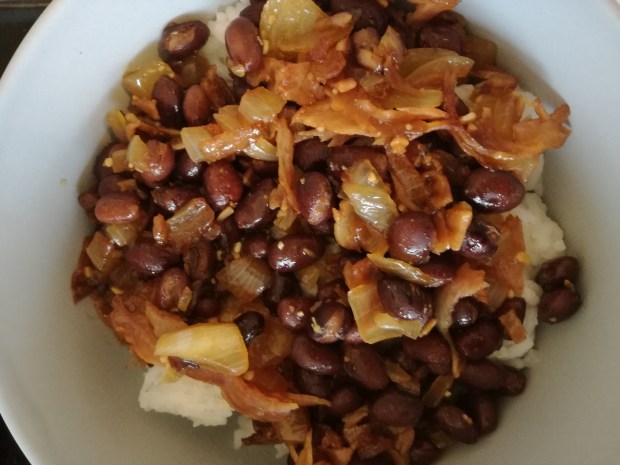
Flavourful Black Beans

Flavoursome Black Beans.jpg

Flavoursome Black Beans on Rice

This is such a wonderful recipe free of all the top 8 allergens that is cheap, quick, and easy to make. It’s fantastic to have as a base recipe that can then be served with rice, tortillas, wraps, empanadas, quesadillas, or to make lunchbox pies.

Ingredients

  • 400g tin of black beans (rinsed)
  • Ham or bacon or pancetta (finely chopped)
    • Check ingredients carefully if you have food allergies, such as soy.
  • 1 diced brown onion
  • 2 tsp crushed garlic
  • 1T balsamic vinegar
  • 1T coconut amino acids (or soy sauce).

This is the base recipe; it’s delicious as is or you can vary it as desired by adding mince, diced chicken, chilli, peas & corn, celery, etc.

Allergies: soy free, dairy free, egg free, gluten free, peanut free, tree nut free.

Directions

  1. Brown the onion and garlic in a frying pan.
  2. Add ham, balsamic vinegar, and coconut amino acids.
  3. Add black beans.
  4. Cook until hot. Can be served immediately.
    • If you have the time, lower the heat to minimum and slow cook for 20 minutes. This allows the flavours to simmer and the onion to caramelize.

This slideshow requires JavaScript.