How to make amazing rotissere / BBQ style corn on the cob

wp-1485411539397.jpg

Amazing slow cooked corn


Want to make amazing corn on the cob? Slow cook it in chicken broth as part of this amazing roast chicken recipe.

How to make amazing rotissere / BBQ style chicken even if you’re working or just plain busy

This creates amazing melting-off-the-bone roast chicken with crispy skin and fantastic gravy. For best results (and practicality) it uses both a slow cooker and a oven. (The alternative is 5 hours in the oven but then you won’t get the amazing corn!).

Ingredients

  • Spice blend
    • 2 tsp salt
    • 1 tsp smoked paprika
    • 1 tsp onion powder
    • 1/2 tsp dried thyme
    • 1/2 tsp white pepper + 1/4 tsp black pepper (or just fresh grind in tri-colour peppercorns)
    • 1/4 tsp cayenne pepper
    • 1 tsp garlic powder
  • 1 large onion
  • 1 chicken to roast
  • Vegetables to roast (i.e. potatoes, zucchini, carrot, whole peeled garlic, corn-on-the-cob).
  • Oil (I like rice bran oil)
  • Potato flakes or cornstarch (for the gravy)

Allergy friendly: soy free, dairy free, gluten free, peanut free, tree nut free.

Tip: Whole peeled garlic is often sold in large bags; consider portioning it out into little bags and freezing it. You can pull it out of the freezer each time you have a roast.

Directions

  1. Mix the spice blend together.
  2. Peel the onion & top’n’tail it.
  3. Make sure the chicken is ready for cooking (i.e. giblets removed).
  4. Rinse the cavity and pat dry with a paper towel.
  5. Rub the spice blend over the chicken inside and out.
  6. Put the onion inside the chicken cavity.
  7. Put the chicken into the slow cooker.
    • A note on timing: You can rub the chicken the night before, wrap it in a plastic bag, and marinade it overnight in the fridge so that all you have to do in the morning is pop it in the slow cooker. The choice on whether to put the cooker on Low or High depends on how long it will be in there and how long you want to have it in the oven. My chicken wasn’t 100% defrosted so I had it on High in the slow cooker for 5 hours and then in the oven for 1.5 hours.
  8. Prepare your vegetables to roast.
    • I chop the potatoes up and put them in the steamer in the microwave for about 10 minutes to give them a bit of a head start before placing them in the roasting pan.  You can brush the veggies lightly with oil before placing the chicken on top – they just need a touch to keep from drying out before the fat from the chicken starts to drip out.
  9. Carefully pull the chicken out of the slow cooker and put it in the roasting pan. Baste it with the juices from the slow cooker.
  10. Roast the chicken for 60-90 mins. Start the oven at 180-200’C; you’ll be able to drop the temperature to 150’C and cover the chicken in tin foil once it has browned. Keep basting the chicken periodically with juices from the slow cooker.
  11. Put the corn-on-the-cob in the slow cooker (in the chicken juices) as soon as you take the chicken out. Cook on High for 60-90 minutes.
    • The juices will only cover the bottom of the corn; this is fine. It comes out cooked, still with a good steamed firmness, sweet, and lightly flavoured by the chicken broth.
  12. Once the chicken, roast veggies, and corn are all cooked, you can use the juices in the slow cooker to make gravy. You can use flour or cornstarch, or try potato flakes.  It’s not just that these are gluten free, it’s that they thicken the gravy quickly and don’t go lumpy like cornflour sometimes does. Add potato flakes gradually (leaving the slow cooker on) and stirring; I made my gravy quite thick.

Leftover roast chicken can be used for the next night, sandwiches, to make chicken fried rice, or as a pizza topping on a flat or scone base.
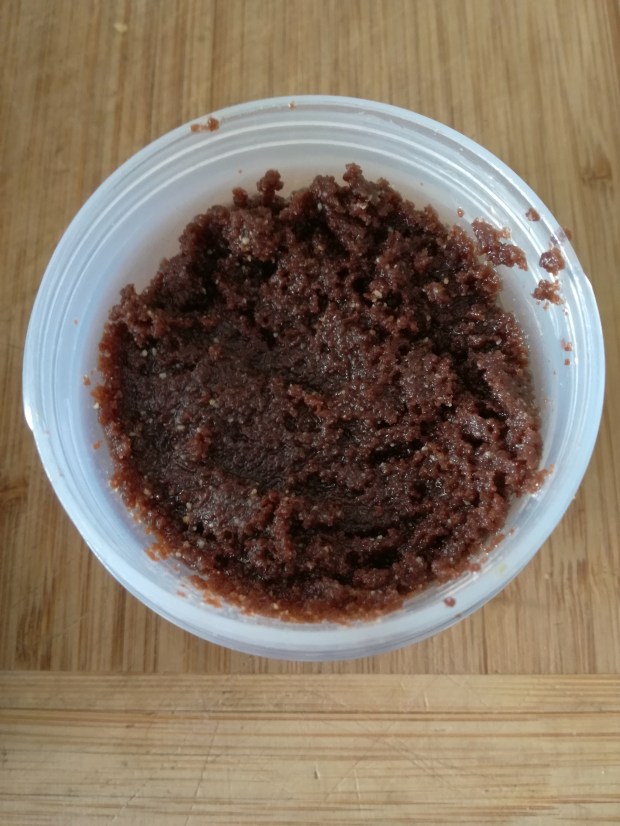
How to make chocolate peanut butter

wp-1485155114616.jpg

Oops – too thick to get smooth in the little pulser. It needs the food processor!

Ingredients

  • 2c (300g) shelled peanuts
    • I used 1/2c for my mini-batch; you probably want to do 2 cups at a time if you’re using it regularly.
  • 1/2 tsp salt
  • 2T oil
    • You may want to use peanut oil. I used rice bran oil.
  • 1/2c (45g) cocoa powder
  • 1 1/2c (170g) powdered sugar

Allergies: soy free, dairy free, gluten free, tree nut free, contains peanuts.

For smooth peanut butter, click here.

My first attempt to make chocolate peanut butter ran into a power problem. I was trying to make a mini-batch in the pulser and the addition of cocoa + honey made it to thick for the motor. I was able to make something warm and delicious for dessert (that tasted like a Snickers bar) but it needed a full size batch in the actual food processor to make it smooth. I have therefore borrow quantities from InspiredTaste.

Directions

  1. Roasting gives the peanut butter more flavour. You can choose whether you want to buy roasted peanuts or roast them yourself (if purchasing pre-roasted, check the type of oil that has been used if you have a soy allergy). Roasting gives the peanut butter more flavour and helps to loosen the oils inside the peanuts to blend into a smoother butter.
    • Heat the oven to 180’C / 350’F and toast the peanuts on a baking sheet till they are golden and glossy with oil. This will take about 10 mins.
  2. Put peanuts, a pinch of salt, and a teaspoon of oil into a food processor.
    • Note: I used a little pulser/grinder but that will only cope with 1/2c peanuts.
  3. Blend for about a minute and then scrape down the sides with a plastic spatula. You’ll find it starts off looking a bit like crumbly breadcrumbs – this is normal!
  4. Blend again until shiny and smooth.
    • Add a teaspoon of oil at a time if you’re finding it dry.
  5. Add salt to taste (and sweetness if you prefer).

The whole process is really quick and will make smooth peanut butter.If you prefer crunchy peanut butter that’s easy too. Put only 1/3c of the peanuts into the blender to start and pulse until they’re chopped into tiny pieces; pull them out and reserve for later. Use the rest of the peanuts to make smooth peanut butter and then stir your crunchy bits back in.

Making your own peanut butter (turns out it’s easy!)

Home-made peanut butter & linseed bread

Ingredients

  • Shelled peanuts
    • I used 1/2c for my mini-batch; you probably want to do 2 cups at a time if you’re using it regularly.
    • Salt
    • Oil
    • Optional: sugar, maple syrup, or honey if you prefer it sweet.

Allergies: soy free, dairy free, gluten free, tree nut free, contains peanuts.

Commercial peanut butters often contain vegetable oil blends so check carefully if you have a soy allergy or make your own 🙂 We discovered this the hard way!

Directions

  1. Roasting gives the peanut butter more flavour. You can choose whether you want to buy roasted peanuts or roast them yourself (if purchasing pre-roasted, check the type of oil that has been used if you have a soy allergy). Roasting gives the peanut butter more flavour and helps to loosen the oils inside the peanuts to blend into a smoother butter.
    • Heat the oven to 180’C / 350’F and toast the peanuts on a baking sheet till they are golden and glossy with oil. This will take about 10 mins.
  2. Put peanuts, a pinch of salt, and a teaspoon of oil into a food processor.
    • Note: I used a little pulser/grinder but that will only cope with 1/2c peanuts.
  3. Blend for about a minute and then scrape down the sides with a plastic spatula. You’ll find it starts off looking a bit like crumbly breadcrumbs – this is normal!
  4. Blend again until shiny and smooth.
    • Add a teaspoon of oil at a time if you’re finding it dry.
  5. Add salt to taste (and sweetness if you prefer).

The whole process is really quick and will make smooth peanut butter.If you prefer crunchy peanut butter that’s easy too. Put only 1/3c of the peanuts into the blender to start and pulse until they’re chopped into tiny pieces; pull them out and reserve for later. Use the rest of the peanuts to make smooth peanut butter and then stir your crunchy bits back in.

Prawn Fried Rice


Ingredients

  • 2c cooked rice (refrigerated from previous day)
  • 1 1/2c frozen vegetables
  • 1 1/2c prawns
  • Dried ginger
  • Sliced green onion
  • Sugar
  • Salt
  • Fish sauce
  • Oil (I like rice bran oil)
  • optional: coriander, chilli, lime slices.

This is the kind of recipe that you may want to make on the spur of the moment because you have leftover rice, or it may be something that you prep the night before so that you can whip up lunch or dinner the next day quickly.

In terms of prep time, the rice needs to have been cooked and cooled long enough. This changes it to resistant starch which will help it to stir fry. My personal preference is basmati rice (both for taste and that it holds together well in a wok); I made this with long grain white rice and it worked well enough but some of the cooked grains for break apart.

My prawns were frozen so I had both those and the veggies covered on the bench for the afternoon to defrost. They were cool when they went in the wok but not frozen so this leads to a quick cooking time.

Tip: I find that sliced green onion freezes well. I portion it out in little bags and then pull it out as needed for stir fries and pizza.

Allergies: soy free, dairy free, egg free, peanut free, treenut free, gluten free. May not be suitable for people with fish or shellfish allergies.

Directions

  1. Cook your rice the day before. Personally, I like to use the rice cooker with water, salt, and rice bran oil.  As your rice cools give it a bit of a fluff (easier if you’ve used some oil in the cooking) and put it in the fridge to cool overnight.
  2. Prepare your vegetables. If you’re using frozen veggies then it’s a good idea to put them in the fridge at the same time as the rice so that it can defrost overnight. Alternatively, you might want to use something like grated carrot.
  3. Prepare your prawns. If frozen, make sure that they’ve defrosted slowly. Give them a rinse and pat dry.
  4. When you’re ready to cook, heat your wok nice and hot with some oil.
  5. Add the prawns and a pinch or two of ginger.
  6. Prawns aren’t as temperamental as squid but they don’t need a long cook time. About 5 minutes for prawns (and less if using shrimp instead).
  7. Add your vegetables.
  8. Add the rice. Keep moving it around to separate and coat the grains.
  9. Add a dash of fish sauce. Add sugar and salt to taste.
  10. Keep moving everything around so that it doesn’t stick; add more oil if needed.  Serve when hot through.
  11. Serve with condiments if desired (like chopped fresh coriander, fresh chillies, lime slices etc.).

Scone Pizza Base

I’ve posted previously with a recipe for making a thin pizza base; a scone pizza base makes a wonderful thick pizza base and brings back warm memories for me of my Poppa in his kitchen making this in the summer holidays. Pizza is also a great way of using up leftovers.

Ingredients

  • 3c standard plain flour
  • 6 tsp Baking Powder
  • 1/4 tsp salt
  • 75g butter
  • 1 to 1 1/2c milk
  • Optional: Add some chopped fresh basil and dry oregano to the flour.

Allergies: soy free, egg free, peanut free.

NOTE: Lots of pizza pastes have added sugar, additives and other things. I prefer tomato paste that’s 99.5% tomatoes + salt and nothing else. The latest pizza had tomato paste on 1/2 and basil pesto on the other 1/2. I added finely diced red onion, thinly sliced zucchini & mushrooms, diced roast pork, and grated cheese. I love adding finely sliced asparagus stalks (the bottom half) when they’re in season.

Directions

  1. Preheat oven to 200’C.
  2. Sift flour, baking powder, salt into a bowl.
  3. Cut butter in until it resembles breadcrumbs.
  4. Add milk and mix quickly until it resembles a soft dough.
  5. Turn out onto floured bench and knead a few times. Roll out into a flat base. (You may want to move onto a lined or greased baking tray before adding the toppings).
  6. Apply your choice of pizza toppings.
  7. Bake for 10 minutes. Check. Cook for another 5-10 mins until golden.

Roast Pork Sirloin

Ingredients

  • Pork Sirloin roast
  • 4 crushed garlic cloves
  • 4 tsp chopped fresh rosemary / 2 tsp dried
  • 1 1/2 tsp salt
  • 1/2 tsp black pepper
  • Olive oil
  • Optional: potatoes, carrots, zucchini etc. to roast.

Allergies: soy free, egg free, peanut free, dairy free, gluten free.

Directions

  • Prepare any vegetables that you want to roast. Personally, I used potatoes, carrots, and zucchini. I was useless at cooking potatoes and avoided doing so (using kumara instead) until I learned the trick of parboiling them (or similar). I chop them up and put them in the steamer in the microwave for about 10 minutes to give them a bit of a head start before placing them in the roasting pan.  You can brush the veggies lightly with olive oil before placing the pork on top – they just need a touch to keep from drying out before the fat from the pork starts to drip out.
  • Mix the garlic, rosemary, salt, and pepper together. Moisten with a dash of olive oil. Rub it all over the pork.  Optional: I’m told that if you like garlic, you can also cut small slits in the pork fat and stick whole garlic cloves in to get some yummy roast garlic.
  • Place the fat side down. Place it on top of the potatoes etc. if you have any in the pan.
    • NOTE: I was rather puzzled when I read the initial recipe I was using as my pork roast was rolled and tied with string – it had fat all over! I shrugged and just chose a side to face up. Turns out this was an error (check out the photos below). If your roast is rolled up, cut the string and lay it flat with the fat facing the bottom of the pan. One end will be thicker as this cut is basically pork sirloin chops + pork belly.
  • Cook at 200’C for 30mins.
  • Check on the veggies and turn the roast over so that the fat is now on top. Roast for 25 mins.
  • Remove and stand for 10 minutes.

So… I’d never cooked one of these before and the rolled pork did seem to resemble the photo I saw on the internet. I didn’t realize that the string was supposed to be cut and the meat lay flat so the cooking (and learning) process took much longer than expected. My main concern was that the pork would dry out (a near thing!) so I was doing a lot of checking and basting towards the end. I also began to appreciate why some of my friends have a meat thermometer rather than needing to slice into the meat to check.

dav

I steam my potatoes in the microwave for about 10 mins before putting in the roasting pan.

Oops – I put the pork in rolled up (as it came). The veggies cooked but the pork was still pink when I unrolled it. All I’d managed to do in an hour was to start cooking the fat on each side of the roll!

Rolling it out flat the meat and fat finally began to cook. After another 30 mins at 200’C there was definitely progress. By this point I was hungry and decided to speed things along.

I trimmed off the fat (just leaving a thin layer to provide moisture). I cooked it for about 20 mins at 180’C (basting regularly) and then grilled it to brown the thin layer of fat.

dav

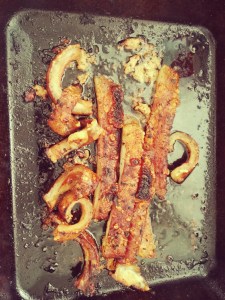
All turned out well in the end with a good collection of roast pork.
dav

The fat I continued to cook to make crackling. The rendered fat and juices can be made into gravy or you can collect the fat as lard. Lard can be used for lots of things, for instance frying potatoes.

Excess roast pork can be frozen and kept for later meals such as pork fried rice or making pizza.
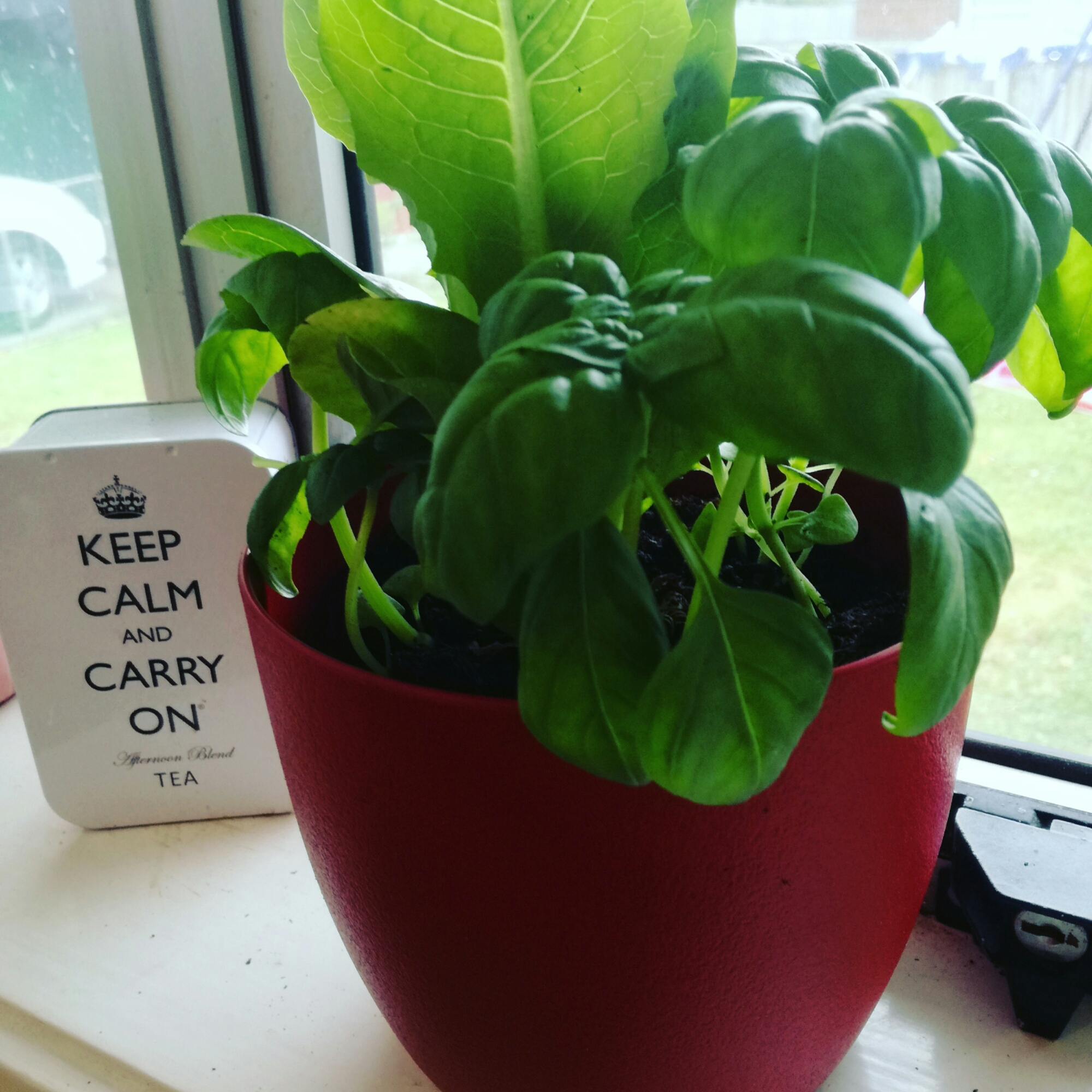
How to have fresh basil cheaply in the kitchen

I’ve tried multiple times to grow basil in the garden with visions of making my own pesto. My problem every time is that the snails think it is delicious and voraciously eat them before my culinary visions can come to pass.
I’ve discovered that it’s far more realistic to simply grow a pot of basil (or in my case basil & one emergency lettuce) on the kitchen window sill. That way you’ll at least have enough basil for topping pizza or spaghetti bolognese (and it smells good too!).

Smashed avocado (easy avocado dip)


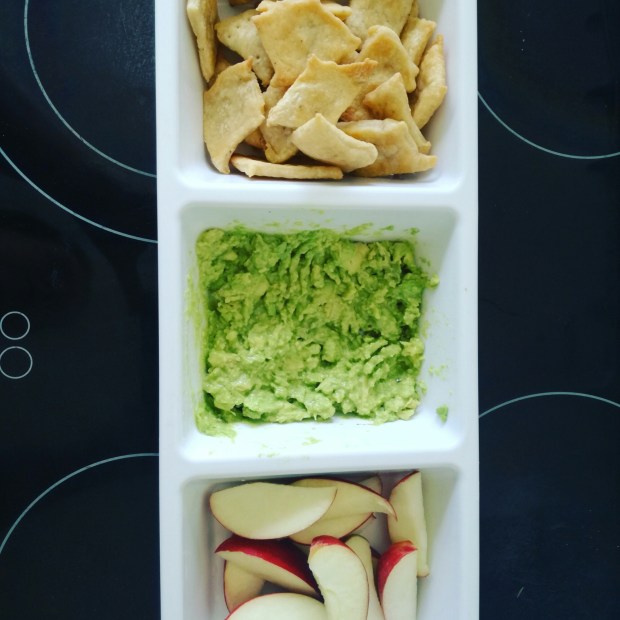
This is an easy dip to make that is great to eat outside in the garden paired with home made crackers.

Ingredients

  • 1 large avocado
  • 1T olive oil
  • 1T lemon juice
  • Salt to taste

Note: This is an easy recipe to scale to the number of people you’re serving. If you’re using a small avocado then change the olive oil & lemon juice from a Tablespoon (15ml) to a dessert spoon (10ml).

Allergies: soy free, gluten free, dairy free, egg free, nut free.

Directions

  1. Scoop out the avocado with a spoon.
  2. Smash up with a fork.
  3. Mix in olive oil, lemon juice, and salt.


Allergies: soy free, dairy free, egg free, peanut free.

Home made crackers

This is a super simple recipe for making your own crackers at home and easy enough to have your toddler help in the kitchen! They’re great for snacks or to use with dip (I love this easy smashed avocado dip!). You can also customise the flavouring and the shapes which makes it a handy recipe to keep in mind for parties. Why not make dinosaur crackers with “molten magma” salsa, or bunny crackers with spiced carrot dip etc. You can also use this recipe to make home made pizza.

Ingredients

  • 1 1/4c flour
  • 1 1/2 tsp sea salt
  • 60ml olive oil
  • 100 ml water

Flavourings

  • 1 tsp dried mixed herbs
  • dash of cracked black pepper

Note: The original recipe called for 1tsp cracked black pepper and no herbs but I changed it for my toddler. It’s an easy recipe to try different flavourings with. You could try herbs and dried garlic, dried onion & grated cheese, dried herbs & marigold petals (they are edible and provide beautiful colouring), chilli & a dash of lime juice etc.

Directions

  1. Combine and mix all the ingredients.
  2. Turn dough onto a floured surface and knead for one minute until smooth.
  3. Cover plastic wrap and refridgerate for 30 mins.
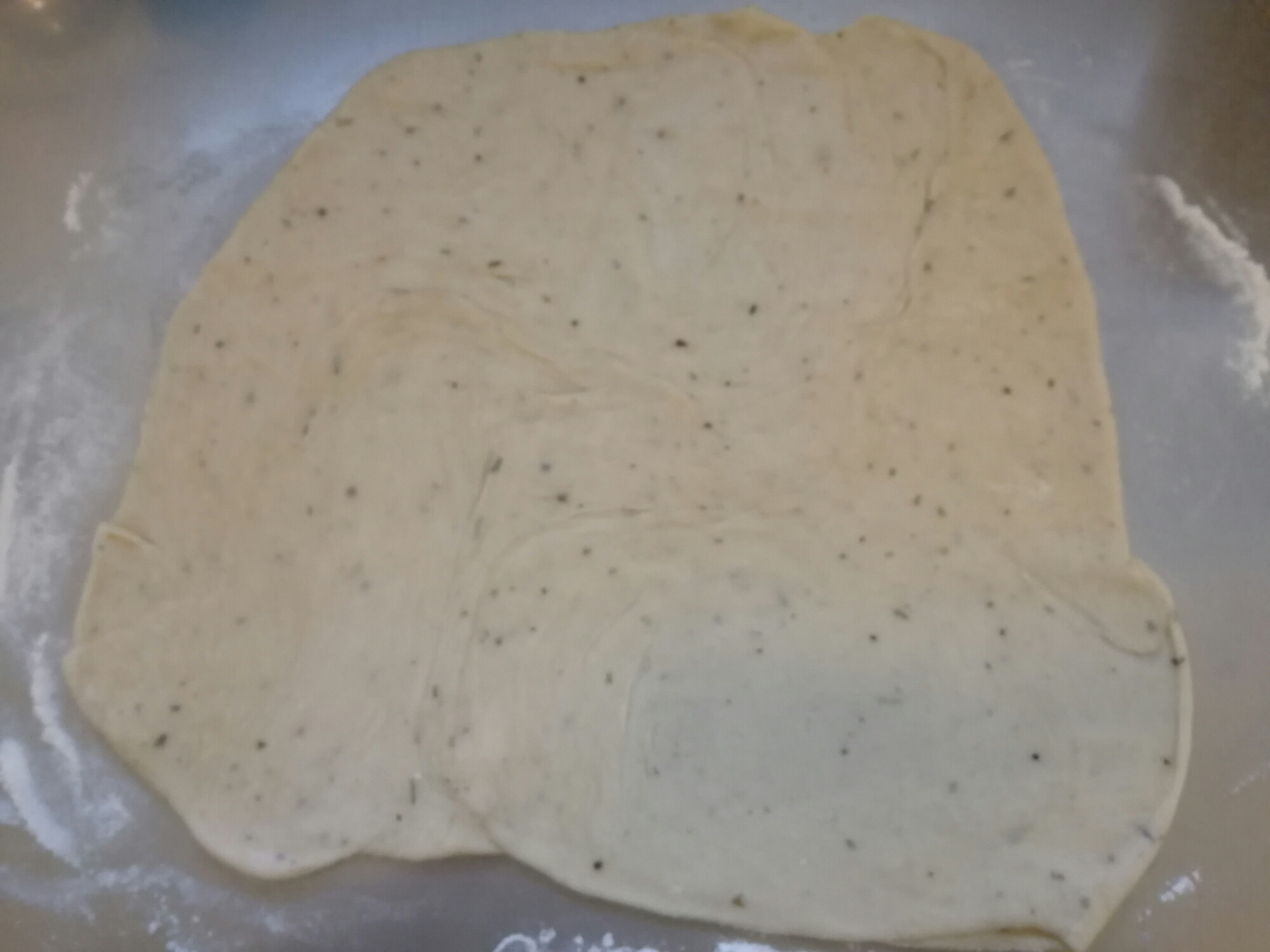
  4. Roll out to 3/4cm thick and cut with a sharp knife. (A toddler friendly wooden bamboo knife also works!).
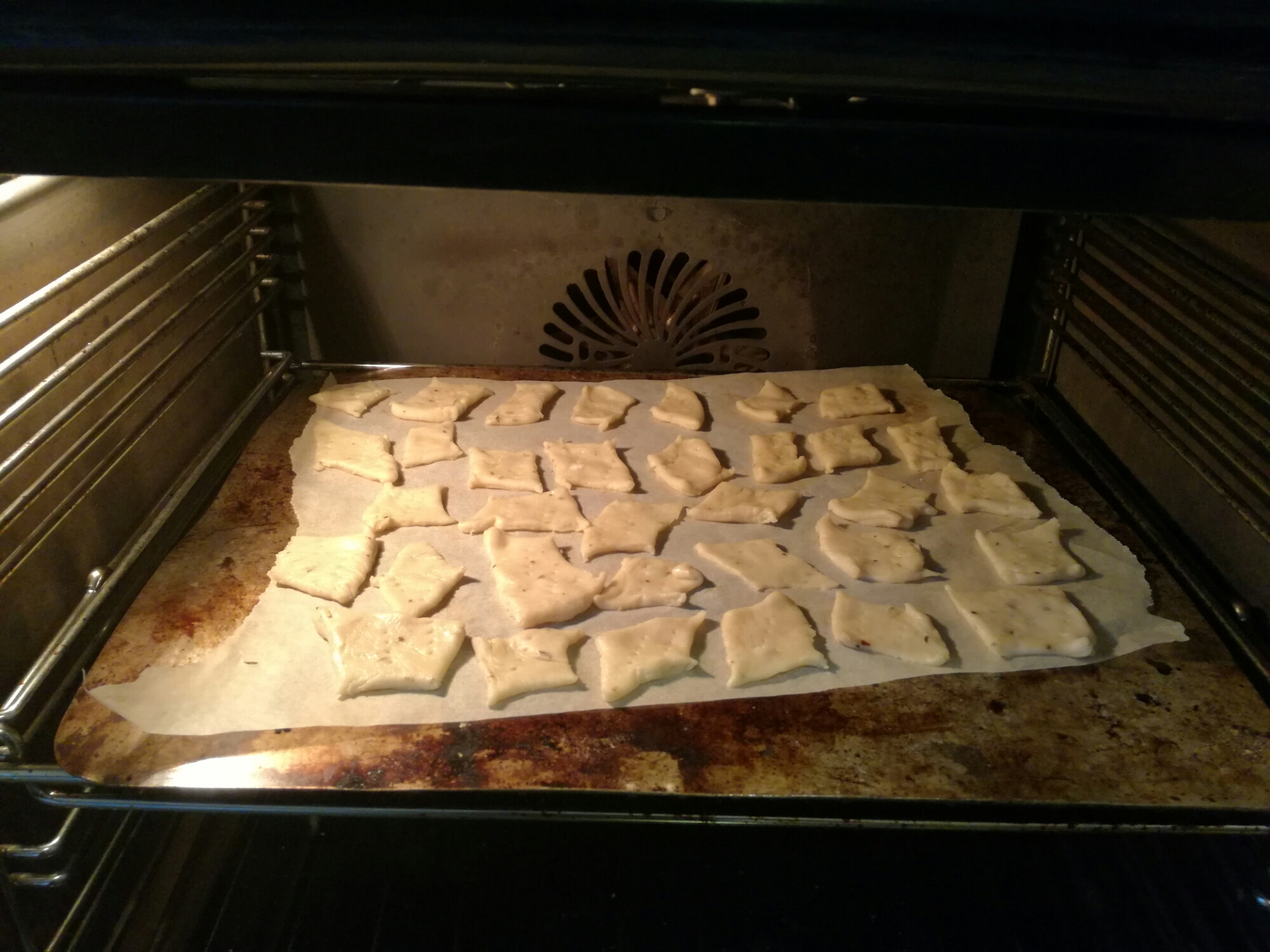
  5. Use a palette knife (fingers and the bamboo knife also work!) to lift onto oven tray. Prick with a fork to prevent puffing (they really do puff up otherwise!).
  6. Bake at 160’C for 10-12 mins.
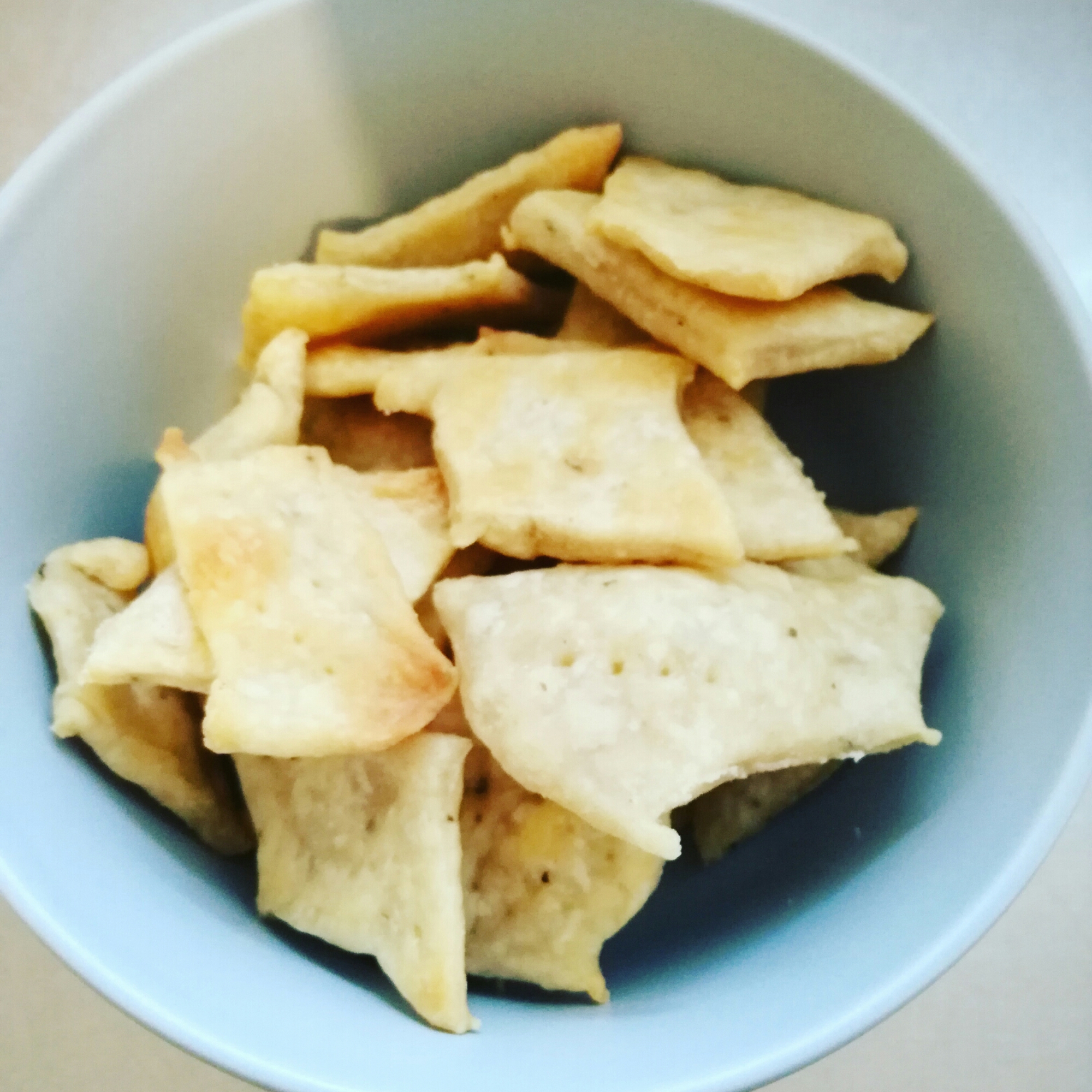
    • My ancient oven isn’t very reliable so I turned the tray around after 10 minutes and had them in there for about another 6 mins. They do go crunchier as they cool and dry as well.
  7. Cool on wire rack.

Note: These can be stored for up to a month in an air-tight container. Uncooked dough can be frozen.

Allergies: soy free, dairy free, egg free, peanut free.

FOLLOW UP:

I’ve made these crackers a couple more times experimenting with flavouring ingredients. So far I’ve found them best to eat in the first couple of days. I suspect that I need to cook them for longer at a lower temperature to get them to keep in a  container and be dry and crispy.

Cheese & garlic: 1 1/2 tsp smoked garlic salt, 1 tsp garlic granules, 1/2c grated cheese, dash of cumin seeds. I loved these, my toddler not so much. I suspect that’s because I like cumin and she doesn’t; they do have a distinct flavour so only add a pinch (or omit) if you’re not sure you like them. Alternatively, you could swap the cumin out for a 1/2 tsp mustard powder.

dav

Tomato & Onion: 1T dried onion, 2 tsp tomato paste, pinch sumac, dash paprika, 1/2tsp mixed herbs.

My toddler really liked these; I think I’d prefer this flavour mix when using this recipe to make a pizza base. Would be interesting to try it with finely chopped sundried tomato & fresh basil although it might need to be eaten same day (it might not keep as well with the added wet ingredients).

dav