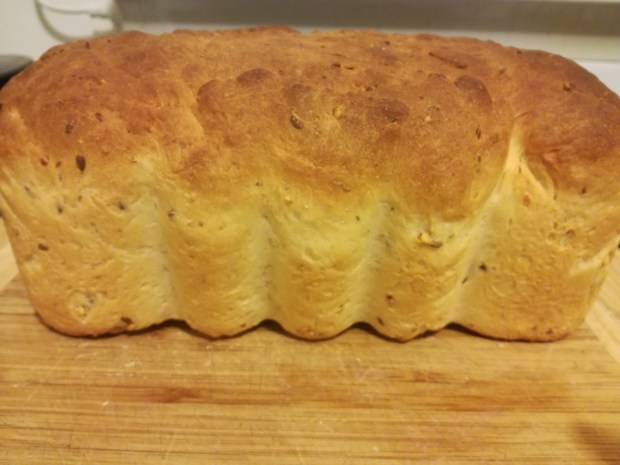
How do I make my bread light and fluffy?

Musings on baking bread

Musings on baking bread

I’ve written previously about ‘Everything you wanted to know about baking bread‘ and it occurred to me today that it’s a little more process driven than ingredient focused. My journey making bread began with making all our bread by hand which I found restrictive and time consuming. I later moved, very happily so, to a Panasonic Bread Maker. That allowed me a little more time to experiment with ingredients and research.

I gave serious contemplation to buying a sourdough starter (sourdough is much easier to digest than commercial bread) but my daughter doesn’t like the tangy taste. I researched ways to make the bread I was feeding my daughter more nutritious. I also made myself more aware of the chemistry involved and how different ingredients impact hydration ratios and rising.

Supermarket bread is essentially refined white flour (so basic starch) with a token amount of other ingredients potentially added; Julian Lee wrote an excellent article in 2018 revealing commercial bread-making processes in New Zealand. At home, you can start with high grade (or strong) white flour but add extra nutrition into the mix.

Whole Wheat

If you can afford to buy stone-ground whole wheat flour then you can make some pretty fine bread. If you’re shopping at the supermarket then it’s sufficient to be aware that the wheat kernel is made up of bran (fiber), the germ (protein and nutrition), and the endosperm (a starchy tissue). You can probably guess which part white flour is made from!

At the supermarket you can buy strong white flour and also buy bags of wheat bran and wheat germ. Not only do these have different nutritional profiles but these also have different impacts on the properties of your bread. Wheat bran has a drying quality and may require additional hydration. Wheat germ will naturally make your bread moister and fluffier.

Keep in mind that you don’t need to make a loaf entirely of white flour. When baking, I usually have 70-80% of my ‘flour’ made up of white flour and then use a range of dry ingredients to make up the weight. This equates to 350-400g of white flour and 50-100g of other flours and seeds.

Wholemeal Spelt Flour

Wholemeal spelt flour has a high nutritional profile and is easier to digest. It also has less gluten so will produce a denser loaf and may require guar gum to help it bind.

Wholegrain Kamut Flour

Like spelt, kamut flour is lower in gluten and easier to digest. It’s a brand name for khorasan wheat and is an older variety of wheat. There have been small studies performed which suggest that kamut flour has health benefits (over standard flour) and may help to reduce certain inflammation markers. It’s important to remember that one of it’s other benefits is that it is an organic wholegrain flour (as opposed to highly refined bleached white flour).

Ground Linseed – Sunflower – Almond (LSA)

Whole seeds can make a loaf dense and the texture doesn’t appeal to everyone. It’s not necessary to pour heaps of whole seeds into your bread dough. You can add plenty of protein, fiber, and omega-3 fatty acids just by adding 2 Tablespoons of ground seeds to your bread dough.

Popular powerhouses of nutrition include linseed (flaxseed), sunflower seeds, almonds, and chia seeds. Quinoa is another but I found even small amounts of quinoa flour to have a noticeable taste in the bread.

You might like to rotate different seeds in order to vary your nutritional profile. The cheapest and easiest option is to alternate between ground LSA and ground chia seeds.

Gluten Free Grains

One of my favourite ways of making multi-grain bread is to use Red Mill Gluten Free Mighty Tasty Hot Cereal. If you’re picturing a cereal box with some puzzlement, it’s actually a mix of freshly milled whole grain brown rice, corn, buckwheat and sorghum. It’s a handy way of adding a broader nutritional profile to the loaf and is so finely milled that it doesn’t overwhelm the loaf. It’s weight-dense so you only need a small amount; it still produces a fluffy loaf and is incorporated into the texture without being obtrusive.

Apple Cake

Apple Cake

Apple Cake

Miss 4 and I have been reading a series of picture books, the latest of which is “The Wolf who visited the land of Fairy Tales.” The wolf goes on a quest to collect a recipe and ingredients to make apple cake. The book has a recipe at the back which inspired me to invent our own version; it has more protein and added micro-nutrients than a traditional recipe. This is a light thin apple cake that reminds me a little of  Tarte Tatin.

If you have young children, this is great for school lunches. Alternatively, read the book during the school holidays (or anything that features baking, ‘Little Red Riding Hood’ would work just as well) and then tie in the real world application with the story. Add in some dress-ups for acting out the story and that’s your morning filled!

Apple Cake

Ingredients

  • 1/2 cup Nuttelex (or dairy-free spread, or butter)
  • 1/2 cup sugar
  • 3 fresh eggs, lightly beaten
  • 1 tsp baking powder
  • 1 cup flour, sifted
  • 1/4 cup wheat germ
  • 1 Tbsp ground linseed
  • 1/4 tsp ground cinnamon
  • 1 tsp finely diced fresh ginger
  • 1/4 cup rice milk (or alternative)
  • 3 large apples, peeled and diced into small pieces.


Directions

  1. Preheat the oven to 180’C / 350’F. Grease the sides and bottom of a round cake tin.
  2. Cream the Nuttelex (or butter) and sugar. Add the beaten eggs and mix.
  3. Gently fold in the baking powder, flour, wheat germ, ground linseed, and ground cinnamon.
  4. Gently stir in the apple pieces and fresh ginger.
  5. Stir in a little rice milk until the batter is smooth.
  6. Pour the batter into the cake pan and bake for 40 mins.


Alternatives

You can change the flavour profile in a variety of ways:

  • Add a splash of freshly squeezed lemon or orange juice.
  • Switch fresh ginger for ground ginger for a milder ginger flavour.
  • Increase the cinnamon to 1 tsp and add 1/4 tsp all spice + pinch nutmeg.

If your child is adverse to the apple being in chunks, consider experimenting with stewed apple or apple sauce. Keep an eye on your dry/wet ratios as this will have an impact.

Are sunflower seeds good for me?

Sunflower-seeds-picture

What are the nutritional benefits of sunflower seeds?

Sunflowers make a beautiful addition to gardens in the summer and a great science project for kids but are their seeds also an overlooked source of essential nutrients?

What are the benefits of sunflower seeds?

Sunflower seeds are rich in Vitamin E, copper, B vitamins like thiamine, selenium, magnesium, fiber, folic acid, and more. They are a source of essential fatty acids; especially linoleic acid and oleic acid. Additionally, sunflower seeds are also an excellent source of  amino acids (especially tryptophan) which make up the building blocks of proteins, B Vitamins, phytosterols, and more. They are also a source of healthy polyunsaturated fats which your body needs.

What is the nutritional breakdown of sunflower seeds?

SunflowerSeeds-Nutrition

Can sunflower seeds help improve my health?

As well as helping maintain your body, sunflower seeds are are most highly correlated with boosting cardiovascular health thanks to their ability to reduce “bad” LDL cholesterol and to prevent hypertension.

Since they also contain minerals like magnesium and selenium, you may also find they help with ‘growing pains’, leg cramps, and tension headaches.

Vitamin E is a powerful antioxidant that helps to reduce inflammation throughout the body. This makes it popular for warding against everything from heart disease, to helping with IBS, or with chronic inflammation as the result of multiple allergies / intolerances.

What are easy ways to include sunflower seeds in my diet?

You could buy them coated in chocolate or dusted in flavourings (like sour cream and chives) but that’s off-setting their health benefits with other calories and additives! Here are some healthier (and still easy!) ways to eat sunflower seeds:

Easy Carrot Cake

Best Ever Carrot Cake

Chelsea Sugar’s Best Ever Carrot Cake

Carrot cake is a delicious winter cake. It’s a great way to use up those extra carrots (while they’re cheap and plentiful) and get some warmly sweet spiced cake into lunchboxes or afternoon tea. My inspiration for the recipe is this Best Ever Carrot Cake which I’ve amended to add in some different micro-nutrients; also, swapping from nuts to seeds makes it suitable for childcare and schools with no-nut policies.

Carrot cake with seeds and ancient grains

Delicious carrot cake with seeds and ancient grains.

Ingredients

  • 1 1/2 cup plain flour
  • 1 tsp baking powder
  • 1 tsp baking soda
  • 1 1/2 tsp ground cinnamon
  • 1/2 tsp ground ginger
  • pinch Allspice
  • 3/4 cup brown sugar or raw coconut sugar
  • 200g grated carrot
  • ½ cup sultanas or raisins
  • 2 tsp ground chia seeds
  • 3 – 4 Tbsp Hubbards Seeds and Ancient Grains Toppers
    • or, a mix (as desired) of coconut thread, linseed, pumpkin seeds, sunflower seeds, buckwheat, puffed quinoa.
  • 3 large eggs
  • 1 cup rice bran oil or canola oil
  • 1 tsp vanilla essence

Allergies: dairy free, soy free, nut free.

Directions

  1. Pre-heat oven to 180°C bake (160°C fan-forced). Grease a 23cm cake tin (6cm deep) and line with baking paper.
  2. Sift all of the dry ingredients into a mixing bowl.
  3. Add carrot, sultanas, ground chia seeds, and coconut + seed mix and stir until combined.
  4. In a separate bowl, whisk eggs, oil and vanilla.
  5. Make a well in the dry ingredients and pour liquid ingredients into the dry ingredients. Mix until just combined.
  6. Pour the cake mixture into the prepared tin and smooth the surface. Bake for 40-50 minutes or until cooked (when a skewer inserted into the centre of the cake comes out clean). Remove from oven, cool for 10 minutes then remove from the cake tin and peel away the paper.
  7. Optional: make cream cheese icing to decorate.


Cream Cheese Icing

  • 50g butter, softened
  • 125g cream cheese, chopped
  • 1½ cups Icing Sugar

Cream Cheese Icing
Beat butter and cream cheese together until combined. Stir in Chelsea Icing Sugar, then beat mixture on high speed until light and fluffy.

Mushroom melt burgers

Mushroom melt burgers

Mushroom melt burgers

Grilled mushrooms with melted cheese make a quick and easy vegetarian meal.

Ingredients

  • Portobello mushrooms (or similar big fleshy mushrooms)
  • Piquant easy-melt cheese (like goat cheese or blue cheese)
  • Fresh salad ingredients (like sliced tomato, grated carrot, baby spinach, lettuce, sliced beetroot, watercress, mungbeans, sliced cucumber).
  • Hamburger bun, brioche bun, gluten-free wrap or bun.

Cheese

If goat cheese seems too…well, goaty, consider a goat-buffalo cheese blend. Similarly, if blue cheese seems too strong consider a creamy mild blue cheese. Alternatively, use a strong tasty or colby cheese + grated parmesan and mozzarella!

For dairy free / soy free / vegan cheese consider: Daiya or Angel Food

Burger buns

If allergies aren’t an issue, there a range of burger buns to choose from, or go up-scale and use a brioche bun. For gluten-free (or soy free) then you may want to use a gluten free bun or wrap. You can also skip the bun (and substitute rice or beans) and tell your child (or yourself) that you’re simply having a super fancy ‘deconstructed’ burger.

Allergies: gluten free*, dairy free*, soy free, egg free, nut free.

Directions

  1. Prepare your salad ingredients.
  2. Grill the mushrooms and cheese.
  3. Assemble your burger. Add dressings (like sauces and mustard) if desired.

Flourless Banana Pancakes

Gluten Free Banana Pancakes & Raspberry Compote

Gluten Free Banana Pancakes & Raspberry Compote

Miss 2 has gone off porridge recently, which is a shame as it’s a cheap, healthy, and filling gluten free breakfast. I wondered how else I might coax her into eating oats and made up these beautiful banana pancakes – she loved them! The idea of including variations was actually inspired by her as she asked for them again and wanted to know if we could make Peanut Butter banana pancakes.

This an easy recipe to make up (for breakfast, snack, or dinner) if you have food allergies in your family. I’ve made it sometimes as Miss 2’s dinner when we’ve had a particularly trying day and we both need some comforting. It’s also a cheap and easy recipe to teach teenage boys to make when they get home from school – more nutritious than filling up on white bread!

Tip: There are two ways that you can make this recipe; you can make it with fork mashed bananas + rolled oats for a more rustic texture or use a food processor to blend the banana smooth + use oat flour. I like to do the latter as I have a little (non-motorised) beater that I use and happen to have oat flour in the cupboard (along with all a multitude of other flours).

Ingredients

  • 1 ripe banana (mashed)
  • 1/2c oats
    • Finely cut ‘quick cook’ porridge oats are best, or, oat flour.
  • 3 1/2T milk / almond or rice milk
  • Pinch salt
  • Pinch cinnamon
  • Optional: 1/4 tsp guar gum + 1/2 tsp Baking Soda
    • If you are using oat flour, this will provide a slightly lighter texture.

Tip: If cooking for celiacs make sure that the oats are certified as gluten free as it is possible for cross-contamination to occur if there are wheat fields nearby.

Allergies: gluten free, dairy free, egg free, soy free, nut free.

Variations

Directions

  1. Mix everything together well in a bowl (or food processor).
  2. Heat frying pan or skillet.
  3. Throw in some butter or neutral oil (like Rice Bran Oil), add a few tablespoons of pancake mix. Cook on both sides until golden brown.

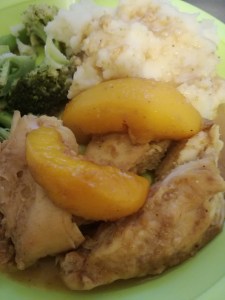
Baked Chicken & Peaches

Baked Chicken and Peaches.jpg

Baked Chicken and Peaches

This is a great dish to make in summer when fresh peaches are cheap; I made it recently on a dark Autumn day with the skies full of rain – tinned peaches work just as well and bring a bright note to the day!

It takes very little time too mix up and put in the oven; combine it with some vegetables and instant mashed potatoes for a quick meal that is also toddler / child friendly!

(FYI I buy plain potato flakes from a bulk buy store rather than buying boxed instant mashed potato from the supermarket.)

Ingredients

  • 2 chicken breasts (boned & skinned)
  • 1/3c brown sugar
  • 1 peach / 1/3 of a 400g tin of peaches
  • 2 pinches of ground ginger
  • 1 pinch allspice or ground cloves
  • 1/2T lemon juice

Optional

  • Superfine white rice flour or cornflour (corn starch) to make gravy.
  • Potato flakes + boiling water + rice bran oil + salt + almond milk to make mashed potatoes.
  • Broccoli.

Allergies: gluten free, dairy free, soy free, egg free, nut free.

Note: The recipe will also work well for larger amounts just double or triple the ingredients based on the number of chicken breasts you are cooking.

Directions

  1. Take a pyrex baking dish and put in the brown sugar.
  2. Put in the chicken breasts (turning them to coat them in sugar).
  3. Lay slices of peaches over the chicken breasts.
  4. Sprinkle the ground ginger, allspice, and lemon juice over the chicken and peaches.
  5. Bake in a preheated oven at 180’C for approx. 30 minutes. Baste regularly with the chicken juices. Cover in tinfoil if needed.
  6. Optional: After removing the chicken and peaches, whisk in some superfine white rice flour (or cornflour) to make a sweet gravy.
  7. Optional: Serve with steamed broccoli, mashed potatoes, and gravy.

Chicken with 40 cloves of garlic

Chicken with 40 cloves of garlic

Chicken with 40 cloves of garlic served with bacon, brussel sprouts, and rice noodles.

I really love the simplicity of this dish and that it’s a one pot meal when cooked in the wok. Miss 2 even ate a brussel sprout after licking all the gravy off it!

Ingredients

  • 40 cloves of garlic (peeled; hard end cut off; cut in half any large cloves)
  • 3 large skinless, boneless chicken breasts (cut in half)
    • You can use chicken tenderloins or thighs instead.
  • Neutral oil (i.e. Rice Bran Oil)
  • Salt & Pepper
  • 3 cups chicken stock + 1/2 cup in reserve
  • 1/4 cup lemon juice
  • 1T dried basil
  • 2 tsp dried oregano
  • 2T fine white rice flour
  • Optional: 2 chopped rashers of bacon (middle or shoulder)
  • Optional: approx. 8 brussel sprouts (chopped in half)
  • Optional: Wild Mushroom Powder

Allergies: soy free, gluten free, dairy free, egg free, nut free.

Directions

  1. In a large skillet / frying pan / electric wok, heat the oil.
  2. Put in the chicken and garlic. Once the chicken is partially cooked, put in the bacon and brussel sprouts to cook as well.
  3. Cook until the chicken is browned on both sides.
  4. Add 3 cups of the chicken stock, lemon juice, basil, and oregano. You may want to keep back some of the lemon juice and add after tasting (it can be quite a strong flavour).
  5. Bring mixture to the boil, then reduce heat and simmer for 10 minutes.
    • Note: If you want to serve with rice noodles, you can rinse the noodles under hot water until you are able to separate them and then cook them in the simmering broth. Not only will this help to reduce the broth but the noodles taste amazing!
    • Taste the broth and add salt + pepper to liking. If you’d like slightly more umami flavour, consider adding  a dash of one of the following: coconut amino acids, wild mushroom powder, soy sauce, or hoisin sauce.* Food allergies will impact choice.
  6. In a small bowl or cup, whisk the rice flour and 1/c of reserved chicken stock. Add this slurry to the cooking mixture and cook until the sauce thickens (you may need to increase the heat).
  7. Serve with rice noodles, rice, or mashed potatoes.

Note: The secret to this recipe is to lightly sear the outside of the garlic cloves – you want them to go soft, sweet, and squishy inside (like when roasted (otherwise the garlic can be a bit overwhelming). In the traditional French recipe the cloves are left intact (skin on) and the dish is cooked in the oven (then you suck out the gooey inner and discard the skin).


This slideshow requires JavaScript.

How to make a vegan chocolate spread that is allergy free and tastes amazing!

Chocolate Buttercream Frosting

Chocolate Buttercream Frosting. I use Nuttelex + coconut milk to make a vegan, allergy free frosting that tastes amazing!

If you have a child with food allergies then you may find it difficult to source safe versions of products like Nutella. Alternatively, you may have a child attending a nut free kindergarten or school in which case Nutella isn’t permitted (as it contains hazelnuts). If you want to use a treat spread, for school lunches or parties, then this recipe will help you make your own!

Ingredients

  • 115g allergy friendly spread like Nuttelex (buttery taste)
  • 2 cups icing sugar
  • 1/2 cup Dutch Cocoa Powder
  • 1/2 tsp vanilla essence
  • 1 – 5 Tbsp  coconut milk

Allergies: gluten free, dairy free*, soy free, egg free, nut free. Vegan*.

Directions

  1. Whip the Nuttelex.
    • I like to use the food processsor (with a plastic beating tool rather than the metal cutting one).
  2. Sift in the cup icing sugar, and cocoa powder. Add the vanilla and 2 Tbsp milk.
  3. Beat until smooth.
    • I like to pulse it slowly in the food processor.
  4. Mix in more coconut milk, 1 Tbsp at a time, until you have a good thick smooth consistency.
  5. Store in an airtight container in the fridge.

Everything you wanted to know about baking bread & rolls!

I stumbled upon a fabulous repository of information at the Robin Hood Baking Centre; apart from a wee bit of product placement all of their information is well presented with helpful photos. I’ve altered the order of information so that there’s a more logical grouping and flow to it 🙂

ADDING FLOUR

Adding Flour

People often add too much flour to dough, and this makes the finished product heavy and dense. Hold back about 1 cup (250 mL) of flour, then add it gradually until you get the desired texture. Add as little flour as possible to the kneading surface. Use a pastry scraper as you knead the dough to pick up any bits that stick to the surface. The dough should still be slightly sticky when fully kneaded— it may be a little harder to work but will give you the desired results.

CHOOSING FLOUR

Choosing Flour

It’s best to use flour specially formulated for baking bread, like Robin Hood® Best for Bread flours. It will help you make delicious breads that are high in volume with a light, even texture.
At the minimum, you want High Grade Flour (not plain flour). You may also find flours that are called ‘Strong Flour’ or which say that they have extra gluten added for breadmaking.

ADDING SALT

Adding Salt

Salt enhances taste, and helps bring out the flavours and aromas of the ingredients in your baked goods. Salt will help with tightening the gluten structure, which strengthens the bread dough, and helps with the volume of the bread in the end.

ADDING SUGAR

Adding Sugar

Yeast feeds on sugar, which causes it to activate and produce carbon dioxide gas. Be sure to follow the recipe, as adding too much sugar can slow down your yeast or keep it from activating.

BAKING WITH YEAST

Baking with Yeast

When using active dry yeast, it’s important to make sure it’s still viable. Always follow the recipe directions, which will include dissolving a specified amount of sugar into lukewarm water (110ºF-115ºF/45ºC-56ºC). Then add the yeast and allow it to stand for 10 minutes. If the yeast bubbles up, it’s still active. If not, your bread or rolls will not rise.

Be sure the water is lukewarm. If the water exceeds 138°F (59°C), the yeast will become inactive.

KNEADING BREAD DOUGH

Kneading Bread Dough

Kneading helps to develop gluten in the bread. Knead dough on a lightly floured work surface, adding more flour if dough is too sticky.

You’ll know kneading is complete when the bread is smooth and elastic. To test it, lightly slap the dough. If your hand comes away clean, it’s ready to rise.

RISING

First Rising
When you let the dough rise, the ingredients activate and carbon dioxide develops causing the gluten to stretch. It will rise best in a warm place (75°F-85°F / 24°C-29°C) that is free from drafts. Make sure you place it in a greased bowl that’s large enough to allow the dough to double in size. Cover the bowl with a tea towel.Once it’s doubled in size and no longer springs back when pressed, lightly punch down the dough and let it rest for 10 minutes to relax the gluten.

Second Rising
Once your dough is placed in or on its pan, it’s ready to rise again in a warm place (75°F-85°F / 24°C-29°C). Let your dough rise until it is again double in size.

If dough overrises, it may collapse in the oven during baking.

If you don’t have a place in your home that’s warm enough, try leaving it in the oven with the oven light turned on. If you like, you can also add a pot of hot water on another rack.

Letting the dough rise twice helps improve the flavour and texture even more.

RISING BREAD DOUGH IN THE REFRIGERATOR

Rising Bread Dough in the Refrigerator

Just finished making your bread dough but need to step away? Place your dough in the refrigerator for the first rising. This slows down the rising as yeast doesn’t like the cold. You can let the dough sit in the refrigerator overnight.

When you’re ready to make the bread, take the dough out of the refrigerator, punch it down, shape the dough and let it rise a second time. Since the dough is cold, it will take longer than normal to rise.

SHAPING A LOAF

Shaping a Loaf

To eliminate large air bubbles, roll out your dough into a large rectangle (approx. 9” x 12” / 23cm x 30cm). From the shorter end, roll it up jelly-roll style, sealing the dough in the middle with the heel of your hand after each turn.

For a different look, bake your loaves free-form on a baking sheet that’s greased or sprinkled with cornmeal. Cornmeal will prevent bread from sticking and provide an interesting texture to the bread.

DIVIDING DOUGH

Dividing dough

Use a sharp knife or kitchen shears when a recipe calls for dividing the dough in half or making into rolls. If you tear the dough it may compromise the gluten, which will affect the rising and shape of the end product.

FREEZING BREAD DOUGH

Freezing Bread Dough

Love homemade bread but don’t want to have to make the dough all the time? Plan ahead and freeze some dough. Use your favourite bread dough recipe but double the amount of yeast called for. Follow the recipe for the mixing, kneading and the first rising. Punch down the dough, shape into loaves that are 2” (5 cm) thick (this allows for quicker thawing). Place in air tight freezer bag and freeze for up to four weeks.

When you’re ready to bake, remove the dough from freezer bag, place it in a greased loaf pan, and cover with greased plastic wrap. The dough will rise as it defrosts. Once thawed, follow your recipe’s baking directions.

GLAZING BREADS

Glazing Breads

Glazes may be used to provide different results in the bread crust. For a crisp crust, brush the dough with a mixture of one egg white and ½ tsp (2 mL) water. For a shiny, golden crust, use a whole egg beaten with 1 tsp (5 mL) water. If you’d like a deep brown crust, use egg yolks instead of egg whites. If you brush the dough with melted butter or oil, it will produce a soft velvety crust.

If you want to top your bread with nuts, seeds or grains, make sure to brush the dough with the glaze first, so it acts like a glue.

CRUSTS – FROM SOFT TO CRISP

Crusts – From Soft to Crisp

Dough that is made with water will typically have a crispier crust, while dough made with milk will be softer.

To soften a crisp crust, brush it with melted butter as soon as it comes out of the oven.

For a darker, richer colour, brush the finished loaves lightly with butter and return them to the oven for 5 to 10 minutes.

HOW DO I GET A CRISP BAGUETTE TYPE CRUST

How Do I Get a Crisp Baguette Type Crust

To get a crisp baguette type crust, you have to create a steam environment in your oven. Using a spray bottle, spray water on the sides of the oven every 10 minutes while the bread is baking. You can also put a pan of boiling water on the bottom rack of the oven under the bread.

VERSATILITY OF BREAD DOUGH

Versatility of Bread Dough

Take your favourite bread dough and change it up by adding nuts, cheese, dried fruit or chopped chocolate. To make a savory dinner bread, you can also add chopped garlic and herbs.

PREPARING YOUR PAN

Preparing Your Pan

Use shortening or oil, like Crisco®, butter, or non-stick spray to grease the pan.

BAKING WITH PROPER HEAT DISTRIBUTION

Baking with Proper Heat Distribution

Unless the recipe says otherwise, always bake your bread on a lower rack.

If you’re baking more than one pan, be sure they are not touching one another or any sides of the oven. You want the air to circulate between them so they cook evenly.

If your crust is becoming too brown too quickly, cover it loosely with aluminum foil.

HOW DO I KNOW WHEN MY BREAD IS BAKED?

How Do I Know When My Bread Is Baked?

Similar to checking the doneness of other baked goods, you can insert a skewer or cake tester into middle of bread. If it comes out clean, it is ready. An instant read thermometer is a very reliable way to check as well. Insert the thermometer in the center of the loaf – if the temperature has reached 190°F/88°C, it is ready.

COOLING BAKED BREAD

Cooling Baked Bread

Remove the baked bread from the pan immediately and place on a wire cooling rack to cool. This allows the air to circulate and prevents the crust from becoming soggy.

WHY IS MY BREAD TOO SMALL?

Why is My Bread Too Small?

Make sure your oven is at the right temperature. If it’s too hot, the bread may bake too quickly, causing a crust to form before the bread is finished rising in the oven.

Also make sure that your bread dough isn’t too cold. Make sure your bread dough has risen in a warm place (between 75°to 85°F/24° to 29°C).

When baking, leave a space between your pans so they are not touching in the oven, allowing for proper air circulation.

WHY IS MY BREAD COARSE AND CRUMBLY?

Why is My Bread Coarse and Crumbly?

If your bread is coarse and crumbly, you may have let your dough over rise or you may have over kneaded the dough. Make sure you follow the recipe directions and allow the dough to rise just until it is double in size – this should take about 1 hour. Knead your dough for the specified time only.

STORING BREAD

Storing Bread

To keep your crust crisp, store your bread in a paper bag at room temperature. It should be good for up to two days. If storing bread at room temperature, avoid storing it in plastic wrap unless you want an especially soft crust.

Bread is best stored at room temperature or frozen. Refrigeration tends to dry out bread.

FREEZING BREAD

Freezing Bread

Bread freezes really well. To freeze, allow your loaf to cool completely, wrap well with plastic wrap, then place in a freezer bag. Be sure to remove all the air or ice crystals will form while freezing.

Thaw at room temperature in the freezer bag to allow the bread to re-absorb the moisture lost during the freezing process.

To freshen your loaf, place it in a 350°F (180°C) oven for 10-15 minutes.