How to make Multi-seed bread (Toddler friendly)

Often Multi-grain bread recipes will include things like whole linseed, sunflowers, pumpkin seeds, and these can be a bit rough on a young toddler’s gut. This is especially apparent when they get old enough to inform you ‘Poo! Seeds!’; they can obviously feel it. So, the seeds I’ve used for this bake are gentler and smaller passing through; the wonderful thing about home-made bread is that you can adapt it to suit. I also really like making Ancient Grains bread which is very light and fluffy!

Ingredients

  • 325ml water
  • 2T + 2 tsp oil (I use rice bran)
  • 1 1/2 tsp salt
  • 2 1/2T sugar
  • 3c 2T flour
  • 2T milk powder
    • Baby formula also works.
  • 9-12T seeds (I used 3T ground linseed, 3T poppy, 3T sesame).

Allergies: soy free, peanut free, tree nut free.

Directions

  1. Put everything into the breadmaker in order listed. Select Dough only.
  2. When it finishes, select Dough only again so that it goes through another knockdown/rising cycle.
  3. Take out dough, knead for a couple of minutes, and place in bread tin. Let it rise while oven heats
  4. Heat oven to 220’C.
  5. Bake at 220’C for 10 minutes, then at 180’C for 30 minutes.
  6. Bread should sound ‘hollow’ if you take it out of the tin and knock on the bottom.

How to make Linseed Bread

To make a 750g loaf. This was delicious with home made peanut butter.

Ingredients

  • 290ml water
  • 2T oil (I use rice bran oil)
  • 1 1/2 tsp salt
  • 2T sugar
  • 3c bread flour
  • 2 1/2T ground linseed/flaxseed
  • 2T milk powder
    • Baby formula also works!
  • 3 tsp bread improver yeast

Allergies: soy free, peanut free, tree nut free.

Directions

  1. Put everything into the breadmaker in order listed. Select Dough only.
  2. When it finishes, select Dough only again so that it goes through another knockdown/rising cycle.
  3. Take out dough, knead for a couple of minutes, and place in bread tin. Let it rise while oven heats
  4. Heat oven to 220’C.
  5. Bake at 220’C for 10 minutes, then at 180’C for 30 minutes; you may want to lower the oven tray when you turn the temperature down. I also recommend removing the loaf from the bread tin for the last 5-10 mins of cooking to allow even browning along the base.
  6. Bread should sound ‘hollow’ if you take it out of the tin and knock on the bottom.

Note: This will not turn out the same if you simply cook it in the breadmaker (it will be okay but not amazing) because the bread is contained by the size of the breadmaker and you can’t vary temperature and distance from heat.

Tip: A longer rising time will result in fluffier bread. I have sometimes done 4 knockdowns (two lengthy and two short) and 4 rising times meaning that the bread with 4-8 hours of ‘proofing’ before baking. Gluten based bread loves getting knocked around; all that kneading and rising helps to elasticate the dough and allows the gluten + yeast to work together to create tiny air bubbles.

If you’re interested in the chemistry of breadmaking check out this great post from Serious Eats.

Did you know? A commercial bakery will go from start to bag in 3 hours or less when making bread; traditional methods (and sourdoughs) take 18-25 hours. One theory behind rising numbers of gluten sensitivity and celiac disease is our move away to industrialized baking; a longer rising time results in decreased gluten proteins as they break down and change. It’s something to think about if you’re considering decreasing gluten in your diet.

How to make Milk Bread

dav

Milk bread

To make a 750g loaf. This was a sweeter denser bread that toasted well. It was delicious with butter & jam, and also with vegemite & avocado.

Ingredients

  • 310ml milk (full cream or standard not trim)
  • 3 tsp oil (I use rice bran oil)
  • 1 1/2 tsp salt
  • 2T sugar
  • 3c bread flour
  • 3 tsp bread improver yeast

Allergies: soy free, peanut free, tree nut free.

Directions

  1. Put everything into the breadmaker in order listed. Select Dough only.
  2. When it finishes, select Dough only again so that it goes through another knockdown/rising cycle.
  3. Take out dough, knead for a couple of minutes, and place in bread tin. Let it rise while oven heats
  4. Heat oven to 220’C.
  5. Bake at 220’C for 10 minutes, then at 180’C for 30 minutes.
  6. Bread should sound ‘hollow’ if you take it out of the tin and knock on the bottom.

How to make amazing rotissere / BBQ style corn on the cob

wp-1485411539397.jpg

Amazing slow cooked corn


Want to make amazing corn on the cob? Slow cook it in chicken broth as part of this amazing roast chicken recipe.

How to make amazing rotissere / BBQ style chicken even if you’re working or just plain busy

This creates amazing melting-off-the-bone roast chicken with crispy skin and fantastic gravy. For best results (and practicality) it uses both a slow cooker and a oven. (The alternative is 5 hours in the oven but then you won’t get the amazing corn!).

Ingredients

  • Spice blend
    • 2 tsp salt
    • 1 tsp smoked paprika
    • 1 tsp onion powder
    • 1/2 tsp dried thyme
    • 1/2 tsp white pepper + 1/4 tsp black pepper (or just fresh grind in tri-colour peppercorns)
    • 1/4 tsp cayenne pepper
    • 1 tsp garlic powder
  • 1 large onion
  • 1 chicken to roast
  • Vegetables to roast (i.e. potatoes, zucchini, carrot, whole peeled garlic, corn-on-the-cob).
  • Oil (I like rice bran oil)
  • Potato flakes or cornstarch (for the gravy)

Allergy friendly: soy free, dairy free, gluten free, peanut free, tree nut free.

Tip: Whole peeled garlic is often sold in large bags; consider portioning it out into little bags and freezing it. You can pull it out of the freezer each time you have a roast.

Directions

  1. Mix the spice blend together.
  2. Peel the onion & top’n’tail it.
  3. Make sure the chicken is ready for cooking (i.e. giblets removed).
  4. Rinse the cavity and pat dry with a paper towel.
  5. Rub the spice blend over the chicken inside and out.
  6. Put the onion inside the chicken cavity.
  7. Put the chicken into the slow cooker.
    • A note on timing: You can rub the chicken the night before, wrap it in a plastic bag, and marinade it overnight in the fridge so that all you have to do in the morning is pop it in the slow cooker. The choice on whether to put the cooker on Low or High depends on how long it will be in there and how long you want to have it in the oven. My chicken wasn’t 100% defrosted so I had it on High in the slow cooker for 5 hours and then in the oven for 1.5 hours.
  8. Prepare your vegetables to roast.
    • I chop the potatoes up and put them in the steamer in the microwave for about 10 minutes to give them a bit of a head start before placing them in the roasting pan.  You can brush the veggies lightly with oil before placing the chicken on top – they just need a touch to keep from drying out before the fat from the chicken starts to drip out.
  9. Carefully pull the chicken out of the slow cooker and put it in the roasting pan. Baste it with the juices from the slow cooker.
  10. Roast the chicken for 60-90 mins. Start the oven at 180-200’C; you’ll be able to drop the temperature to 150’C and cover the chicken in tin foil once it has browned. Keep basting the chicken periodically with juices from the slow cooker.
  11. Put the corn-on-the-cob in the slow cooker (in the chicken juices) as soon as you take the chicken out. Cook on High for 60-90 minutes.
    • The juices will only cover the bottom of the corn; this is fine. It comes out cooked, still with a good steamed firmness, sweet, and lightly flavoured by the chicken broth.
  12. Once the chicken, roast veggies, and corn are all cooked, you can use the juices in the slow cooker to make gravy. You can use flour or cornstarch, or try potato flakes.  It’s not just that these are gluten free, it’s that they thicken the gravy quickly and don’t go lumpy like cornflour sometimes does. Add potato flakes gradually (leaving the slow cooker on) and stirring; I made my gravy quite thick.

Leftover roast chicken can be used for the next night, sandwiches, to make chicken fried rice, or as a pizza topping on a flat or scone base.

Chocolate Irish Potato Cake (Vegan & Allergy Friendly)


Ingredients

  • 4T ground linseed/flaxseed + 6T hot water
    • OR use 4 eggs.
  • 1c hot unseasoned mashed potato (instant is fine)
    • 1c of potato flakes + approx. 3/4c boiling water makes 1c mashed potato.
  • 1c hot water
  • 3/4c rice bran oil
    • OR 3/4c softened butter
  • 1 1/2c sugar
  • 1 tsp vanilla
  • 2c flour (or gluten free baking mix)
  • 2 1/4 tsp Baking Powder
  • 1/2 tsp Baking Soda
  • 1/4 tsp salt
  • 1 1/4c cocoa
  • Optional: 1 tsp cinnamon

Allergies: soy free, dairy free, egg free, peanut free, tree nut free, gluten free*.

Note: I’ve included ingredient options so that you can choose whether to use butter & eggs; I made mine without. It’s worth having a recipe like this even if you don’t have allergies. It’s great if you’ve run out of other ingredients (or would rather use the eggs for breakfast!), it’s cost effective, it’s allergy friendly to share with others, and you’re getting extra nutrients + fibre from the linseed. The other fabulous thing about linseed as an egg replacement is that it makes cakes and breads beautifully moist.

My inspiration for this recipe came from finding potato flakes in a bulk foods store and wondering what I could do with them. I gather from the internet that in some countries (like the USA) it’s reasonably common to find potato flakes or instant mashed potato at the supermarket; elsewhere, have a hunt in bulk food and health food stores.

Directions

Note: This is a thick batter and you’ll get the smoothest batter by using a food processor. You can also use a big mixing bowl and electric hand mixer but in that case you’ll want to go a bit slower (i.e. egg, beat, egg, beat, etc. and alternate the potato & dry ingredients) to blend & aerate it.

  1. Pre-heat oven to 180’C.
  2. Prepare your egg replacement. Use a bowl or mug, put in 4T ground linseed and 6T hot water. Mix and then leave it, for 5-10 mins, until needed (this gives the seeds time to absorb the water) it turns into a stretchy liquid that’s a bit thicker than egg.
  3. Mix up your mashed potato. You can use a bowl, put in 1c of potato flakes, and then slowly add 3/4 – 1 cup of boiling water while stirring until smooth. It turns into mashed potato very quickly.
  4. Slowly add 1c of hot water to the mashed potato stirring carefully to create a smooth liquid.
  5. In the food processor, blend the oil, sugar, and vanilla until smooth.
  6. Add the linseed (egg-replacement) and blend.
  7. Add the liquidy potato.
  8. Add the flour, baking powder, baking soda, salt, cocoa, cinnamon and blend till smooth.
  9. Pour into a silicon cake tin.
  10. Cook for 25 min and check (a knife is likely to come out sticky); cook for another 15 mins and check (a knife is now likely to come out clean). Turn the oven off and leave the cake inside for another 10 minutes. Pull cake out and place on bench to cool.
  11. Dust with icing sugar.

This comes out as a beautifully moist, rich, chocolatey cake.

Alternatives:

  • If anyone successfully plays around with coconut flour/sugar, let me know. I wonder if it would turn out like a gluten-free Bounty Bar cake.
  • If you like coffee consider adding 2T dark roasted instant coffee when adding the dry ingredients.
  • For birthdays or special occasions, try splitting the batter between two cake tins. Layer the cakes with cherry, plum, or raspberry jam in between and a thick chocolate frosting on top.
  • For another allergy friendly chocolate cake, check out this Depression-Era Chocolate cake.

How to make chocolate peanut butter

wp-1485155114616.jpg

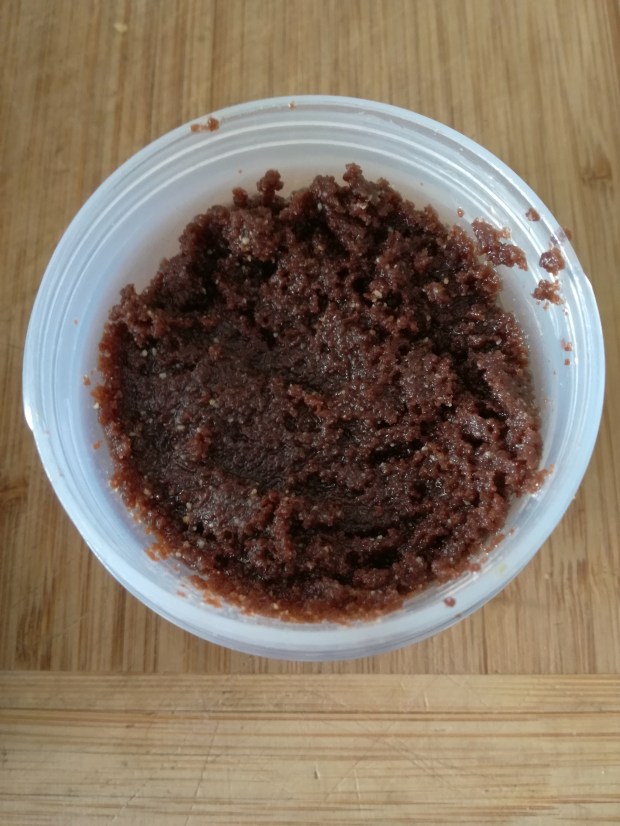
Oops – too thick to get smooth in the little pulser. It needs the food processor!

Ingredients

  • 2c (300g) shelled peanuts
    • I used 1/2c for my mini-batch; you probably want to do 2 cups at a time if you’re using it regularly.
  • 1/2 tsp salt
  • 2T oil
    • You may want to use peanut oil. I used rice bran oil.
  • 1/2c (45g) cocoa powder
  • 1 1/2c (170g) powdered sugar

Allergies: soy free, dairy free, gluten free, tree nut free, contains peanuts.

For smooth peanut butter, click here.

My first attempt to make chocolate peanut butter ran into a power problem. I was trying to make a mini-batch in the pulser and the addition of cocoa + honey made it to thick for the motor. I was able to make something warm and delicious for dessert (that tasted like a Snickers bar) but it needed a full size batch in the actual food processor to make it smooth. I have therefore borrow quantities from InspiredTaste.

Directions

  1. Roasting gives the peanut butter more flavour. You can choose whether you want to buy roasted peanuts or roast them yourself (if purchasing pre-roasted, check the type of oil that has been used if you have a soy allergy). Roasting gives the peanut butter more flavour and helps to loosen the oils inside the peanuts to blend into a smoother butter.
    • Heat the oven to 180’C / 350’F and toast the peanuts on a baking sheet till they are golden and glossy with oil. This will take about 10 mins.
  2. Put peanuts, a pinch of salt, and a teaspoon of oil into a food processor.
    • Note: I used a little pulser/grinder but that will only cope with 1/2c peanuts.
  3. Blend for about a minute and then scrape down the sides with a plastic spatula. You’ll find it starts off looking a bit like crumbly breadcrumbs – this is normal!
  4. Blend again until shiny and smooth.
    • Add a teaspoon of oil at a time if you’re finding it dry.
  5. Add salt to taste (and sweetness if you prefer).

The whole process is really quick and will make smooth peanut butter.If you prefer crunchy peanut butter that’s easy too. Put only 1/3c of the peanuts into the blender to start and pulse until they’re chopped into tiny pieces; pull them out and reserve for later. Use the rest of the peanuts to make smooth peanut butter and then stir your crunchy bits back in.

Making your own peanut butter (turns out it’s easy!)

Home-made peanut butter & linseed bread

Ingredients

  • Shelled peanuts
    • I used 1/2c for my mini-batch; you probably want to do 2 cups at a time if you’re using it regularly.
    • Salt
    • Oil
    • Optional: sugar, maple syrup, or honey if you prefer it sweet.

Allergies: soy free, dairy free, gluten free, tree nut free, contains peanuts.

Commercial peanut butters often contain vegetable oil blends so check carefully if you have a soy allergy or make your own 🙂 We discovered this the hard way!

Directions

  1. Roasting gives the peanut butter more flavour. You can choose whether you want to buy roasted peanuts or roast them yourself (if purchasing pre-roasted, check the type of oil that has been used if you have a soy allergy). Roasting gives the peanut butter more flavour and helps to loosen the oils inside the peanuts to blend into a smoother butter.
    • Heat the oven to 180’C / 350’F and toast the peanuts on a baking sheet till they are golden and glossy with oil. This will take about 10 mins.
  2. Put peanuts, a pinch of salt, and a teaspoon of oil into a food processor.
    • Note: I used a little pulser/grinder but that will only cope with 1/2c peanuts.
  3. Blend for about a minute and then scrape down the sides with a plastic spatula. You’ll find it starts off looking a bit like crumbly breadcrumbs – this is normal!
  4. Blend again until shiny and smooth.
    • Add a teaspoon of oil at a time if you’re finding it dry.
  5. Add salt to taste (and sweetness if you prefer).

The whole process is really quick and will make smooth peanut butter.If you prefer crunchy peanut butter that’s easy too. Put only 1/3c of the peanuts into the blender to start and pulse until they’re chopped into tiny pieces; pull them out and reserve for later. Use the rest of the peanuts to make smooth peanut butter and then stir your crunchy bits back in.

Prawn Fried Rice


Ingredients

  • 2c cooked rice (refrigerated from previous day)
  • 1 1/2c frozen vegetables
  • 1 1/2c prawns
  • Dried ginger
  • Sliced green onion
  • Sugar
  • Salt
  • Fish sauce
  • Oil (I like rice bran oil)
  • optional: coriander, chilli, lime slices.

This is the kind of recipe that you may want to make on the spur of the moment because you have leftover rice, or it may be something that you prep the night before so that you can whip up lunch or dinner the next day quickly.

In terms of prep time, the rice needs to have been cooked and cooled long enough. This changes it to resistant starch which will help it to stir fry. My personal preference is basmati rice (both for taste and that it holds together well in a wok); I made this with long grain white rice and it worked well enough but some of the cooked grains for break apart.

My prawns were frozen so I had both those and the veggies covered on the bench for the afternoon to defrost. They were cool when they went in the wok but not frozen so this leads to a quick cooking time.

Tip: I find that sliced green onion freezes well. I portion it out in little bags and then pull it out as needed for stir fries and pizza.

Allergies: soy free, dairy free, egg free, peanut free, treenut free, gluten free. May not be suitable for people with fish or shellfish allergies.

Directions

  1. Cook your rice the day before. Personally, I like to use the rice cooker with water, salt, and rice bran oil.  As your rice cools give it a bit of a fluff (easier if you’ve used some oil in the cooking) and put it in the fridge to cool overnight.
  2. Prepare your vegetables. If you’re using frozen veggies then it’s a good idea to put them in the fridge at the same time as the rice so that it can defrost overnight. Alternatively, you might want to use something like grated carrot.
  3. Prepare your prawns. If frozen, make sure that they’ve defrosted slowly. Give them a rinse and pat dry.
  4. When you’re ready to cook, heat your wok nice and hot with some oil.
  5. Add the prawns and a pinch or two of ginger.
  6. Prawns aren’t as temperamental as squid but they don’t need a long cook time. About 5 minutes for prawns (and less if using shrimp instead).
  7. Add your vegetables.
  8. Add the rice. Keep moving it around to separate and coat the grains.
  9. Add a dash of fish sauce. Add sugar and salt to taste.
  10. Keep moving everything around so that it doesn’t stick; add more oil if needed.  Serve when hot through.
  11. Serve with condiments if desired (like chopped fresh coriander, fresh chillies, lime slices etc.).

Scone Pizza Base

I’ve posted previously with a recipe for making a thin pizza base; a scone pizza base makes a wonderful thick pizza base and brings back warm memories for me of my Poppa in his kitchen making this in the summer holidays. Pizza is also a great way of using up leftovers.

Ingredients

  • 3c standard plain flour
  • 6 tsp Baking Powder
  • 1/4 tsp salt
  • 75g butter
  • 1 to 1 1/2c milk
  • Optional: Add some chopped fresh basil and dry oregano to the flour.

Allergies: soy free, egg free, peanut free.

NOTE: Lots of pizza pastes have added sugar, additives and other things. I prefer tomato paste that’s 99.5% tomatoes + salt and nothing else. The latest pizza had tomato paste on 1/2 and basil pesto on the other 1/2. I added finely diced red onion, thinly sliced zucchini & mushrooms, diced roast pork, and grated cheese. I love adding finely sliced asparagus stalks (the bottom half) when they’re in season.

Directions

  1. Preheat oven to 200’C.
  2. Sift flour, baking powder, salt into a bowl.
  3. Cut butter in until it resembles breadcrumbs.
  4. Add milk and mix quickly until it resembles a soft dough.
  5. Turn out onto floured bench and knead a few times. Roll out into a flat base. (You may want to move onto a lined or greased baking tray before adding the toppings).
  6. Apply your choice of pizza toppings.
  7. Bake for 10 minutes. Check. Cook for another 5-10 mins until golden.