Making a mermaid’s magical pool (or pirate’s treasure trove)

img_20170207_200203_732.jpg

Mermaid’s magical pool

A few things from the craft box can be a fun way of transforming a paddling pool for an afternoon. We picked up all the shells scattered round the garden, sprinkled in magic dust (blue and silver large-cut glitter), and added glittery-fluffy-balls as treasure.

Making play dough is easy

Home made play dough

Home made play dough is super easy to make. It’s cheap, keeps well, you can choose what colours you want, and it doesn’t colour little hands the way commercial play dough often does. It also retains its colour much better if you’re using more than one colour rather than turning into an amorphous purple-brown.

Ingredients

  • 1c plain flour
  • 1/4c salt
  • 1T cream of tartar
  • 1T oil
  • 1/2 tsp food colouring
  • 1c boiling water

Note: This makes a small batch, just double if you want a big batch.

Directions

  1. Mix dry ingredients.
  2. Mix in oil.
  3. Slowly add boiling water. (You may not need all of. It should be smooth and pliable not sticky).
  4. Store in air tight container.

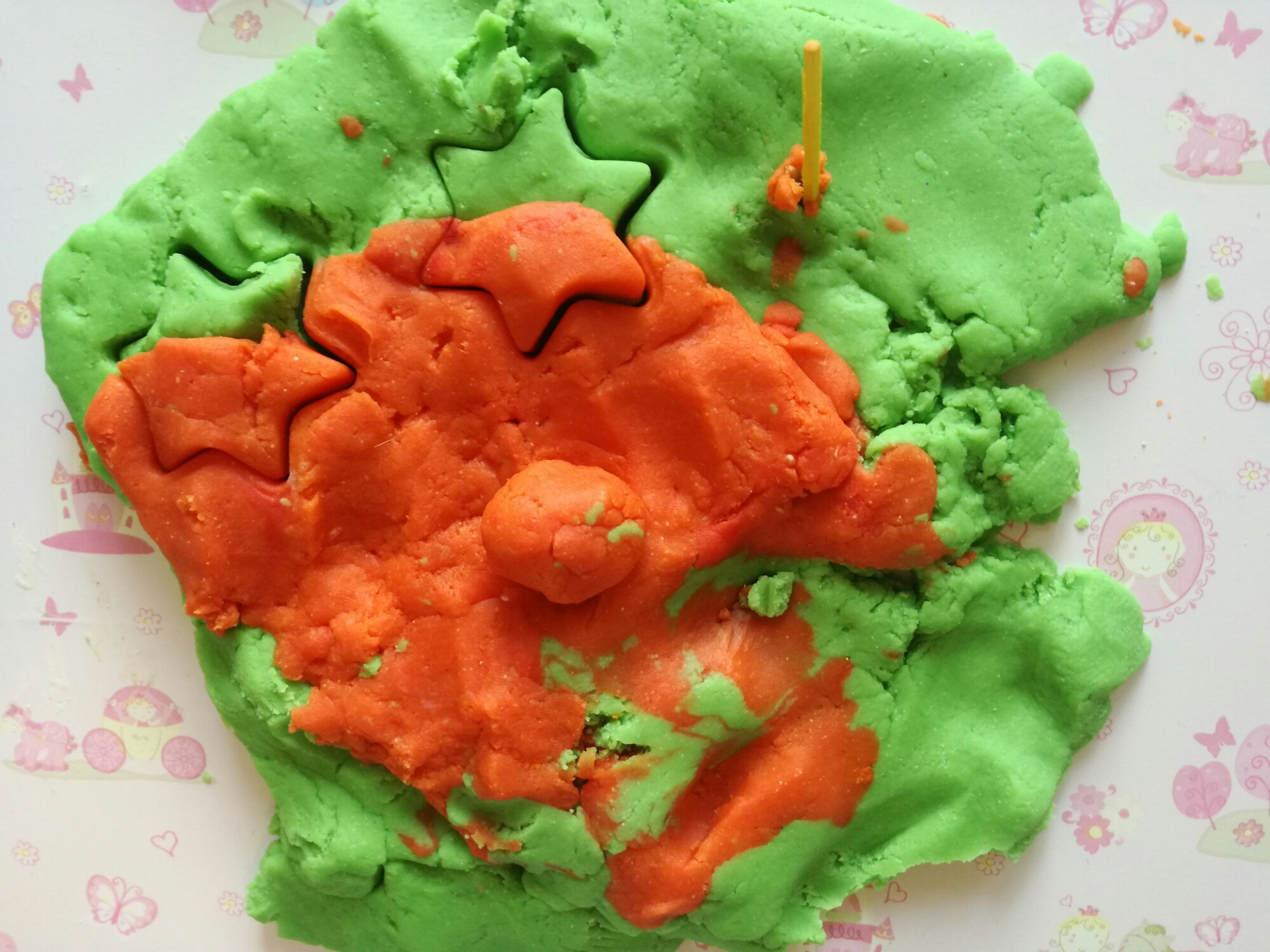
Orange play dough

Combining colours

Can soybean oil and soy lecithin trigger an allergic reaction?

health-question

I’m drafting this post late one night in the hot muggy dark when I should be sleeping, would rather be sleeping, because I’ve spent the past hour awake and unable to successfully switch off. I think it’s because my brain is still percolating on today’s research and trying to fit it in with all of the other health-related research of the last few months; it’s rather like trying to put together one of those large jigsaw puzzles where you only have a vague idea of the expected outcome because you’ve lost the lid to the box which has the finished picture.

If you, or a family member or loved one, has been diagnosed with a soy allergy then you’re probably familiar with the phrasing that “the vast majority” (emphasis on the air quotes) of sufferers will not experience an allergenic reaction to soybean oil or soy lecithin. This does then rather prompt the question of, ‘Why not?’

What is Soybean Oil?

This oil is incredibly widely used worldwide. In the USA particularly it is apparently the most widely used edible oil taking up 55% of the market share in 2014. It’s cheap to obtain (because it’s grown year round in many countries as livestock feed), doesn’t have a lot of inherent flavour, and is proven to be highly adaptable and stable for uses within the food industry.

This is problematic if you’re allergic to it because it can appear in anything from dried fruit (like sultanas), to peanut butter, to cookies, to non-dairy coffee creamers. Anything that contains undeclared “vegetable oils” becomes suspect because there is a high likelihood that part (or all) of that is soybean oil.

The soybeans are cracked, heated, rolled, solvent-extracted with hexanes, refined, and then may be further blended and/or hydrogenated (partially or fully). Some sites discuss health concerns about soybean oil purely to do with potential adverse health concerns relating to hexanes, hydrogenation, or trans-fats. I haven’t researched those sufficiently to have formed an opinion so I’ll leave that to readers to follow up on should they wish.

What is soy lecithin?

To make soy lecithin, soybean oil is extracted from the raw soybeans using a chemical solvent (usually hexane). Then, the crude soy oil goes through a ‘degumming’ process, wherein water is mixed thoroughly with the soy oil until the lecithin becomes hydrated and separates from the oil. Then, the lecithin is dried and occasionally bleached using hydrogen peroxide. (1) (2).

Soy lecithin is used as an emulsifier to help stabilize food products and prevent them from separating out into their component forms (like in chocolate or margarine). Sometimes it will be declared on food packaging in full (i.e. soy lecithin), other times there is simply an additive number; 322 is almost always soy, 471 often so.

Can soybean oil or soy lecithin trigger an allergic reaction?

That’s really the crux of the matter if you (or loved one) has been diagnosed as allergic to soy. I’ve seen the full gamut of opinion online and in published books.

Some sources will argue that the high heats used to produce soybean oil and soy lecithin denature the allergenic proteins; others argue that there are no soy proteins in these products (or so few that they can’t cause a reaction). Admittedly, some of these articles I suspect of having a commercial bias.

Some take the middle ground and say that “the vast majority” of people sensitive to soy will not have an allergic reaction and to discuss it with your medical specialist (which you should do).

Some argue that it is difficult to accurately test concentration levels of soybean protein in these products and that often there is no legal requirement to do so (or insufficient oversight for sufficient regulatory surety). For instance, one study in 2001 found that the level of proteins found in six lecithin samples ranged from 100 to 1,400 ppm (parts per million); that’s a big range even in such a small sample size. By comparison, the 2013 ruling by the FDA required that gluten-free foods contain less than 20 ppm (3).

There don’t seem to be large-scale studies into using these products to trigger IgE antibodies. Small studies publishing in 1998 seem to suggest that these can cause an allergic reaction but only in some people that are allergic to soy (4, 5). One (non-medical) article suggested that sensitivity to soy lecithin may be linked to gut permeability (i.e. the more damaged and inflamed the gut has become, the more susceptible one becomes to even the tiniest trace of soy protein).

Conclusions

Yes, it is possible to have an allergic response to soybean oil and/or soy lecithin. Miss 2 appears to be allergic to soybean oil and I have reason to suspect that soy lecithin may also be a problem. Anecdotally, I’ve read blogs by people that react to these and corresponded with others that have. Working out if you’re allergic to soybean oil and/or lecithin can be a lengthy and frustrating process that often comes back to food diaries, trial and error, and consulting with a medical specialist.

Part of the problem with these two products is the possible variations; one day a food product might contain sufficient ppm of soy protein to trigger a reaction and another time it might not. For instance, leaving aside questions of general health, take the following example:

One Friday night you go to the supermarket and purchase (A) ice cream and (B) ice cream cones; both of these products contain soy lecithin as emulsifiers.

  • How much soy protein is in the separate batches of lecithin in products (A) and (B)? What if one has 18 ppm and the other has 1650 ppm?
  • What percentage of each product is made up of soy lecithin? What if one product is 5% and one product is 0.5%?
  • How much of each product are you consuming? What if your ratio of ice-cream to cone is 4:1 ?
  • What if the only reason you have a reaction is because of allergenic loading; i.e. you’re not actually reacting to (A) or (B) but rather to the combined exposure as a result of (A) + (B)?

Maybe you react and maybe you don’t. Maybe you buy exactly those same products (from exactly those same manufacturers) a month later and you do react because one or more of those questions above has a different answer.

Final conclusion: Food allergies suck.

I feel like I should make some off-the-cuff remark like “Food allergies suck (but not as much as vampires)” just to lighten the mood but the reality is that they do. Kia kaha, stay strong.


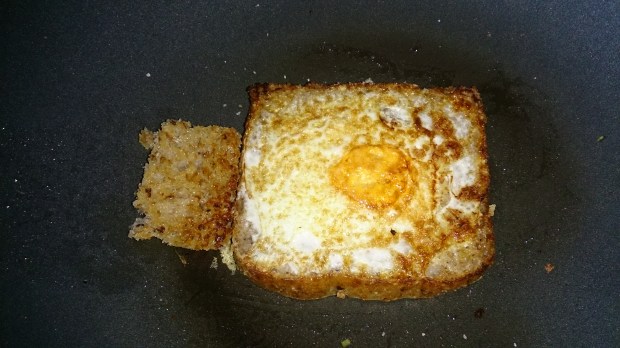
Egg in a hole

dsc_0339

Eggs in a hole. Such an easy recipe but one I’ve only discovered recently.

Ingredients

  • Egg (can be gluten free bread)
  • Butter (or dairy-free spread)
  • Bread
  • Optional: Salt & Pepper to taste. Chopped chives. Grated cheese.

Allergies: soy free, dairy free*, peanut free, tree nut free.

Directions

  1. Butter the bread and cut a rectangular window out of the middle.
  2. Heat frying pan (or skillet) and pop both pieces of bread in butter side down. Add a little butter into the ‘window’ and wait for it melt.
  3. Crack an egg into the ‘window’.
  4. Let it cook until the egg white has firmed up and then flip. Also flip your little cut out bread.
  5. Cook for a bit longer so the egg white is firm (you may want the yolk runny).
  6. Serve with any seasonings that you want. The cut out bit of bread is delicious and crunchy and can also be dipped into runny egg yolk.


The busy mum’s guide to making quick & easy gnocchi

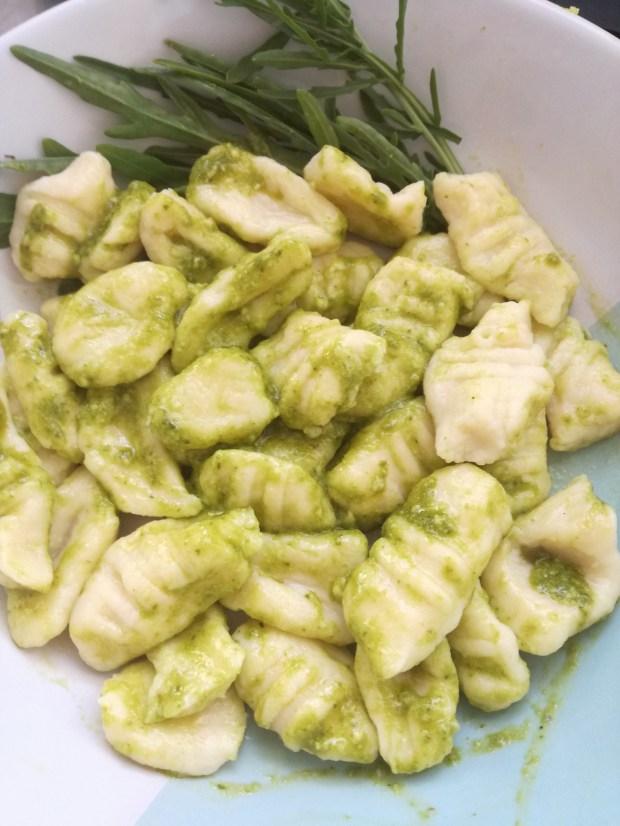
wp-1486186942853.jpg

Potato gnocchi with basil pesto

I’ve never made gnocchi before and was keen to give it a try. I read about ten different recipes / blogs / tips & tricks posts and soon realized that it’s easy to make gnocchi but hard to make good gnocchi. Gnocchi should apparently be light fluffy clouds of joy that practically melt in your mouth rather than dense like they often are. If you’re making them using traditional methods then top tips seem to be: Use russet potatoes (or one’s generally dry & starchy), never use a blender / stick / food processor, use a ricer not a masher, add only just enough flour, and don’t over mix.

My favourite photo-blog by someone truly passionate about gnocchi and experimenting to make perfect gnocchi was by Daniel Gritzer.

This is a cheat’s way of making quick gnocchi for busy mums (apologies to any Italians reading this)! You can also make an egg free version and fry them as a tasty snack!

Ingredients

  • 1c potato flakes
  • Optional: 2 tsp parmesan powder
  • 1/2 tsp salt
  • 1/2c boiling water
  • 1 egg
  • 1/2c – 3/4c plain flour

Note: Makes dinner for one adult. Double (or increase) recipe as needed. You can also lay gnocchi flat (single layer) and freeze for a couple of months.

Allergies: soy free, gluten free, dairy free, tree nut free, peanut free.

Directions

  1. Put the potato flakes, parmesan, and salt, in a bowl. Add approx. 1/2c boiling water and stir.
    • Normally I’d add about 3/4c water to make mashed potato but adding less water means that you don’t need to add as much flour to balance it out.
  2. Add flour and stir / knead to combine into a dough. The mixture should be smooth, pliable, and not sticky. Don’t over knead.
  3. Roll mixture into 4 balls (or more depending on if you’ve doubled / tripled the recipe etc.).
  4. Using a floured bench, roll each ball out into thumb width ‘wriggly worms’ (as Miss 2 deems them).
  5. Chop them into 1/2″ – 3/4″ pieces.
  6. If you have a gnocchi board then you can use that to do the ridges. I don’t and used the alternative method which is to press and roll them off a fork and indent the back with your thumb.
  7. Bring salted water to the boil in a large wide pot.
  8. Drop in gnocchi in batches (so they’re not touching). They’ll need about 2 minutes to rise to the surface and 1-2 minutes at the top.
  9. Pull out with a slotted spoon.
  10. Serve with sauce.


How to make quick & easy fried gnocchi (a.k.a. rapid roastini)

wp-1486177347251.jpg

Pan fried quick & easy gnocchi – so much yum!

So I was trying to make gnocchi for the first time this afternoon and decided to make a mini batch that excluded egg. I could tell (from the many blogs / tips & tricks / recipes that I’d read prior) that this batch would not make good gnocchi. It was much denser then the first batch that I’d made. On the other hand, being a frugal mumma means experimenting in the kitchen so I proceeded to roll it out and make little gnocchi. I was pretty sure that they were just the right texture to pan fry and they turned out as a delicious gluten-free snack that Miss 2 thought was delicious!

Ingredients

  • 1/2c potato flakes
  • 1 tsp parmesan powder
  • 1/4-1/2 tsp smoked garlic salt
  • 1/4 – 1/2 tsp onion powder
  • 1/4c boiling water
  • 1/4c plain flour

Note: This makes a snack for one adult (to share between adult & toddler) just multiple the ingredients by the number of serves you want to make.

Allergies: gluten free, soy free, egg free, peanut free, tree nut free. Can be made dairy free.

Directions

  1. Put the potato flakes, parmesan, garlic salt, and onion powder in a bowl. Add approx. 1/4c boiling water and stir.
  2. Add flour and stir / knead to combine into a thick dough. The mixture should be smooth, thick, and not sticky. Don’t over knead.
  3. Roll mixture into 2 balls (or more depending on if you’ve doubled / tripled the recipe etc.).
  4. Using a floured bench, roll each ball out into thumb width ‘wriggly worms’ (as Miss 2 deems them).
  5. Chop them into 1/2″ – 3/4″ pieces.
  6. If you have a gnocchi board then you can use that to do the ridges. I don’t and used the alternative method which is to press and roll them off a fork and indent the back with your thumb.
  7. Heat a frying pan and cover the bottom in a thin layer of oil (I use rice bran). Once the oil is hot drop in the gnocchi.
  8. It only takes 1-2 mins to fry them on each side (you can turn using silicon tongs or a spatula).
  9. Place them on a paper towel and lightly pat off the oil.
  10. Serve with chili mayo or your choice of dips.

This slideshow requires JavaScript.

Companion planting in the garden

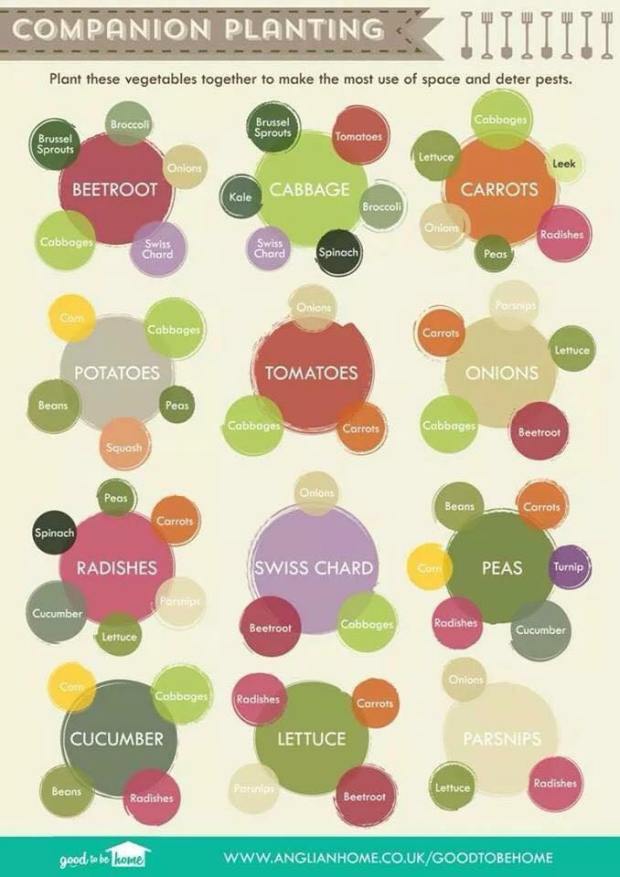
companion-planting

Growing vegetables can not only be cost effective but it’s also a great way to involve kids in garden-to-table cooking. They can feel a real sense of accomplishment in growing and cooking something. My toddler (like so many others) goes through odd phases with vegetables. Sometimes the only vegetable she’ll reliably eat is dried seaweed, or peas and corn, or one month it was cucumber and another it was broccoli.

She does, however, have a distinct interest in eating anything she can pick from the garden herself – strawberries, sun-warmed tomatoes, sorrel, peas-in-a-pod, harvesting baby potatoes. We only a small raised square bed but I try to always have something in there (with some plants being more successful than others).

Companion planting is a great way of making the best use of your space and working out what plants are happiest co-habitating. I can only assume that tomatoes and potatoes are not happy flatting together – not only because of this eye-catching infographic but because my potatoes flourished below-ground while the tomato plants dies above-ground.

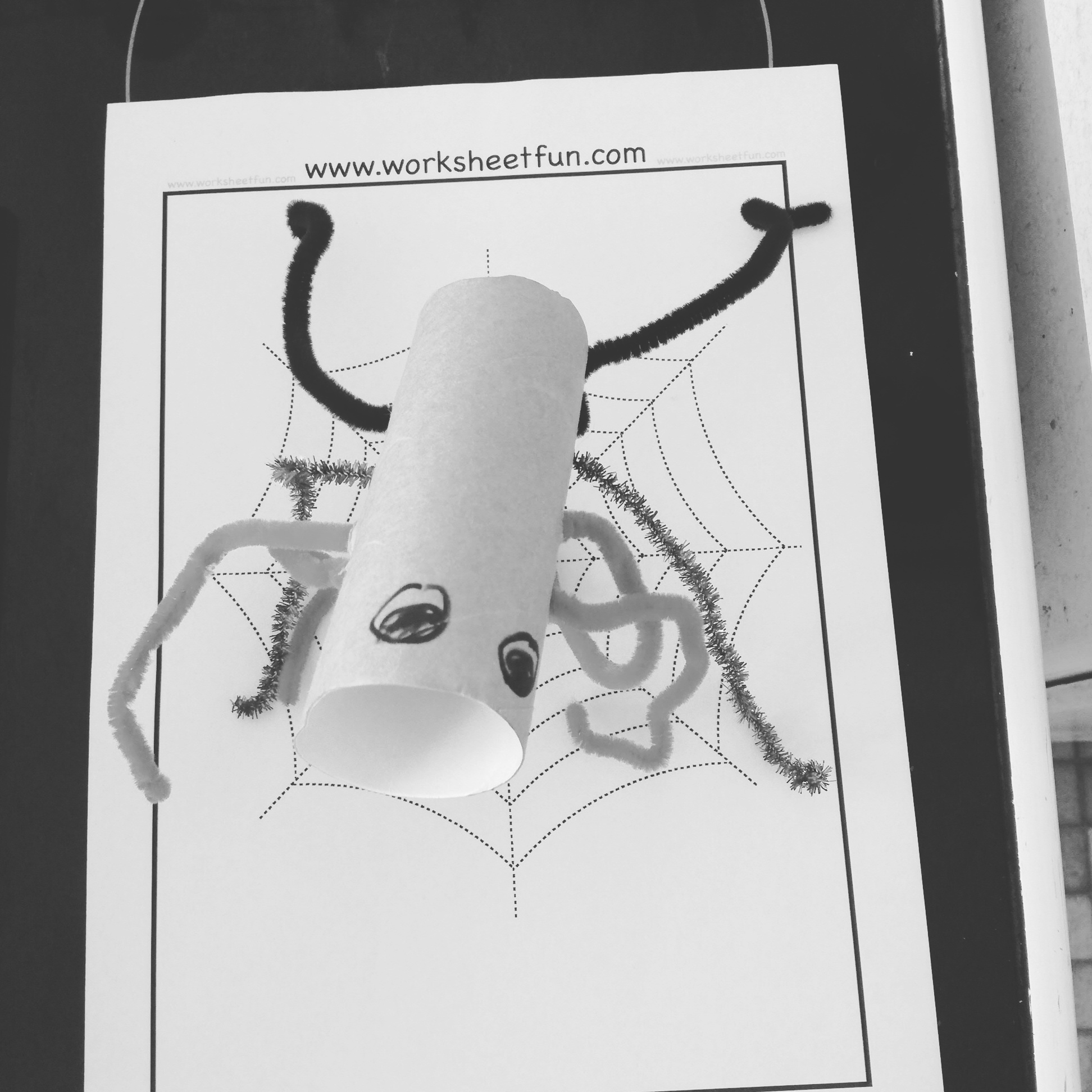
How to make a simple spider

Thankfully toddlers are not art critics. They take joy in simple pleasures and aren’t going to worry if your arts and crafts skills aren’t going to get you a gallery listing.

You can make a simple spider using:

  • Cardboard inner tube
  • Scissors or sharp knife
  • Pipe cleaners
  • Marker pen or felt tips (or buttons or googly eyes).
  1. Cut your paper tube to size (toilet rolls are a good size but a paper towel roll will need cutting in half or thirds).
  2. Make eyes. The simplest option is to draw then on but googly eyes are great if you have a packet lying around.
  3. Make 4 holes on each side of the paper tube (roughly parallel).
  4. Push 4 pipe cleaners through the parallel holes so they stick out each side. You now have 8 legs!
  5. Draw a web for your spider or print one out from Worksheet Fun.

Making your own gourmet nut butter – it’s easy!

wp-1485639944207.jpg

Home-made Tree nut butter

Ingredients

  • Raw unsalted nuts.
    • I used a 150g blend that was cashew nuts (51%), almonds (26%), brazil nuts (11%), hazel nuts (6%), macadamia nuts (6%).
  • Oil (I use Rice Bran oil).
  • Salt

Allergies: soy free, dairy free, gluten free, egg free, peanut free.

I posted recently about how easy it is to make peanut butter and wanted to try my hand with tree nuts.

Making your own nut butter can be great if you have a food allergy in your family. It’s handy because you can customize it and experiment with different nuts. It can also be a cost effective way of making nut butter. Often tree nut butters are really expensive but if you’re able to pick up the nuts cheaply then it’s quick to make your own!

Directions

This slideshow requires JavaScript.

  1. Roasting gives the nut butter more flavour. You can choose whether you want to buy roasted nuts or roast them yourself (if purchasing pre-roasted, check the type of oil that has been used if you have a soy allergy). Roasting gives the peanut butter more flavour and helps to loosen the oils inside the nuts to blend into a smoother butter.
    • Heat the oven to 180’C / 350’F and toast the nuts till they are golden and glossy with oil. This will take about 10 mins.
  2. Put nuts, a pinch of salt, and a teaspoon of oil into a food processor.
  3. Blend on 10-20 second bursts and scrape down the sides with a plastic spatula as needed. You’ll find it starts off looking a bit like crumbly breadcrumbs – this is normal!
    • I found the tree nuts were a lot tougher than the peanuts and took longer to blend. You don’t want to overheat the motor on your food processor so be kind to it and aim for short bursts on/off!
  4. Continue blending  until shiny and smooth.
    • Add a teaspoon of oil at a time if you’re finding it dry.
  5. Add salt to taste.

Potato Latkes

latkes

Potato Latkes

Ingredients

  • Potatoes
    • I use around 450g per batch.
  • 1 small red sweet onion, finely diced.
    • I have used brown onion as well for more of a hashbrown flavour.
  • 2 eggs, beaten.
  • 3T flour
  • Salt & pepper to taste.
  • Oil (or butter) for frying.
  • Toppings: sour cream & apple sauce.

Allergies: soy free, dairy free, gluten free, peanut free, tree nut free.

Directions:

  1. Grate the potato.
    • A food processor is great for this! I have also hand grated. In some countries you can buy bags of frozen pre-shredded potato.
    • Note: if using a food processor for the potato then you can also use it for the onion but remove the potato first.
  2. Squeeze the potato with your hands to remove excess moisture and then pat dry.
  3. Put the potato in a mixing bowl and add onion, eggs, seasonings, and flour. Mixture should be thick and cohesive.
  4. Heat and oil a frying pan and fry batches of potato mix (I use about 2T for each patty).
  5. Fry for several minutes on each side.
  6. Drain on paper towels and serve immediately or keep warm in the oven on an oven tray lined with baking paper.
    • If you want to wait and have everyone eat together then you can brown each side of the latkes on a higher temperature, cook for a slightly shorter time, and then finish them all off in the oven for 5-10 mins.