While we were studying Guatemala, we really enjoyed learning about the life cycle of sea turtles and how important it is to provide safe nesting sites for them to lay their eggs; such as the beaches of Monterrico. Turtles return to where they are born to lay their eggs, which are then vulnerable to predation (by both humans and animals). Once safely in the water, turtles form a vital part of the eco-system and without them systems can become imbalanced – such as an increase in jellyfish populations and a decrease in fish. In addition to adult turtles being actively hunted for commercial purposes, they are also at risk from increasing plastic pollution in our oceans – often mistaking it for food such as jellyfish.
Help protect our oceans by arranging a clean-up at your local beach. In New Zealand, you can even claim a beautiful wooden medal through DOC’s Kiwi Guardian programme!
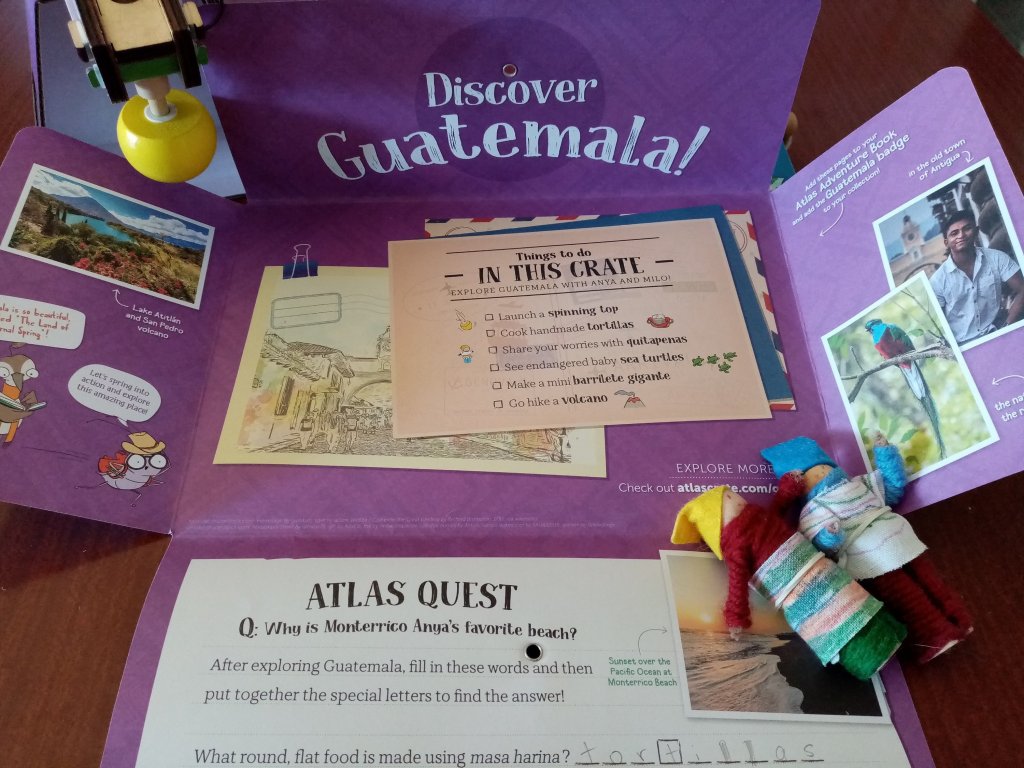
You begin by opening your travel mail from Milo and Anya to find out about their latest travel adventures! Miss 6 enjoys seeing all the photos in Guatemala.
There is a passport sticker to add to our Adventure Passport and various cards about Guatemala to add to it as well. These range from a country map and cultural information, to activity cards with things to do. Learn: some Spanish greetings and phrases; learn about the Quetzal as both a currency and the national bird, learn about Chichicastenango – one of the most beautifully colourful cemeteries in the world, and the turtles of Monterrico. We did a small study unit on turtles at the same time as learning about Guatemala 🙂
Our first craft was making a wooden spinning top with launcher. Trompos are popular in both Guatemala and Mexico and are launched from a standing position (check out this video); Atlas Crate make their’s easier for beginners by including a launcher.
Making a worry doll
These are inspired by Guatemalan Muñeca quitapena. Legend has it that a Mayan princess named Ixmucane received a special gift from the sun god of wisdom to solve any problems that worried humans. Children whisper their worries to the dolls and place them under their pillows at night; the dolls will hold their worries for them and hopefully the children will have a peaceful night’s sleep – waking with new insight and solutions for their concerns.
HOW DO I ORDER ATLAS CRATE?
This is not a paid review. I spent a lot of time searching the internet to find out more information about the Kiwi Crate and Atlas Crate boxes before deciding to try them and found the blog posts / photos that people shared were really useful!
If you would like to try Atlas Crate (or one of their other lines), you can receive 50% off your first box by clicking here.
What I like about the Atlas Crate kits is that they provide a colourful and imaginative way of exploring the world through hands-on activities. I like that they use a mix of STEM and art to explore different concepts and ideas. Their products are also very well made, with clear instructions, and kids feel a real sense of pride in what they accomplish with each box.
There’s no obligation to sign-up in an on-going capacity so it’s easy to tie them in with birthdays / Christmas; the boxes are quite compact so they also store easily in a cupboard for bringing them out on a rainy day. Other families will choose to sign up for a longer period (like a 3, 6, or 12 month cycle).
WHAT IS IN AN ATLAS CRATE?
Each Atlas Crate comes with a special airmail envelope from Anya the Cricket and Milo the Sandpiper revealing where they’ve been on their latest adventure. There is a special passport sticker for your child’s Atlas Adventure Book plus seven new pages to add about a new country (highlighting geography, customs, landmarks, history, and foods).
There are supplies for two activities (which might be a mix of art, STEM, and games) as well as suggestions for more DIY activities to try at home – from things to make, to things to bake!
If you choose the Deluxe option, then you will also receive a book that helps you explore that month’s destination. This upgrade is an additional USD$9.95 (approx. $15 NZD) and can impact shipping costs as well. Since we’re homeschooling, I decided that we’d try the Deluxe option for 6 months to see how useful we find it.


 Flying Solo